by Yasmin | 13 Oct, 2023 | Blog, News, Pug Health
By Helen McKee. (MRCVS)
PDWRA Vet Advisor.
I have been asked to write about pet insurance as it can be quite a minefield out there, as with any insurance.
We ask that all people who adopt a PDWRA pug take out insurance on their pug. The reason for this, as no doubt you have picked up from the previous articles, is that pugs are prone to a large number of health conditions, most of which can be very expensive to investigate and treat.
It can cost at least £3,000 for corneal graft surgery, an MRI, or a work up for a metabolic problem, not to mention BOAS surgery, hence the need for insurance.
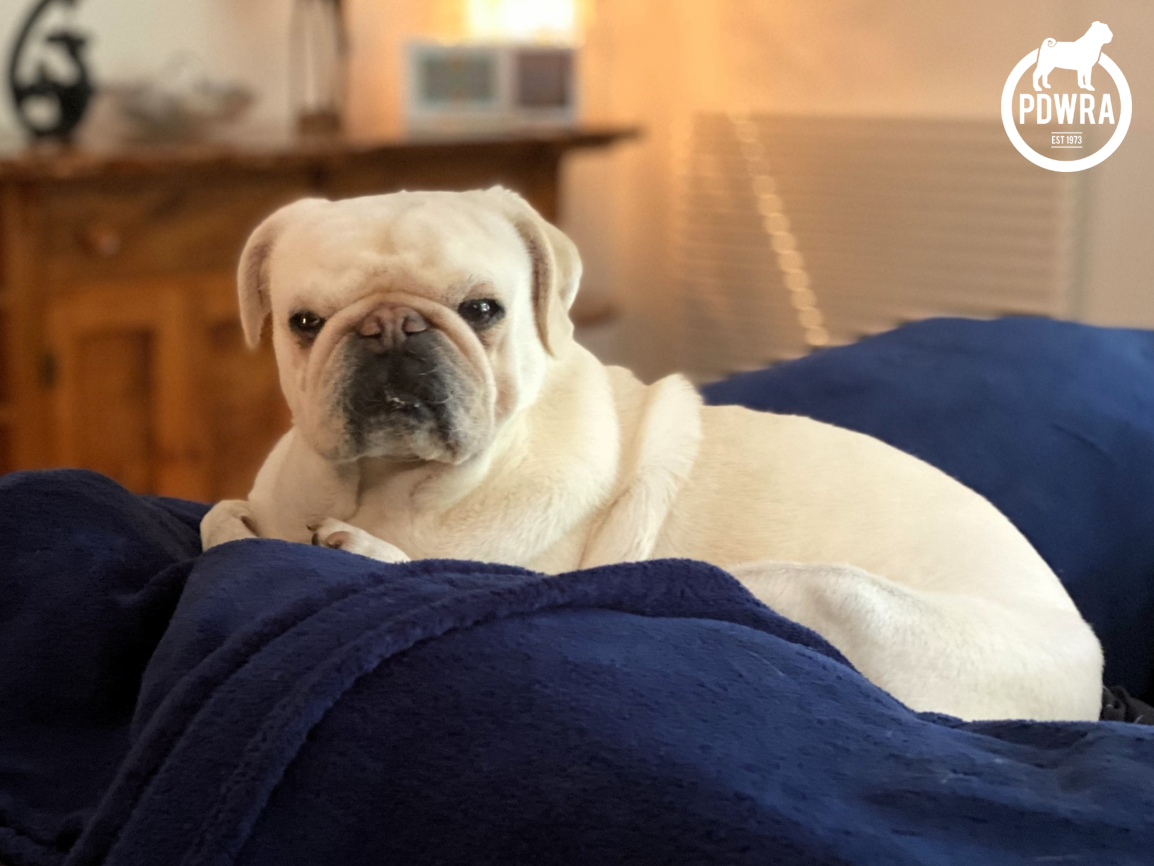
For example, our daughter noticed that her (white) PDWRA pug had suddenly slowed down having always been fit despite being 10 years of age. Blood tests by local vet revealed some significant abnormalities and we asked that he was immediately referred.
He was seen by the referral practice the next day, and through investigations, including a CT scan and needle guided biopsy, was found to have abdominal tumours that had spread to his lungs (metastases). The total cost of both the primary and referral vet fees was £3,500.
Whilst our daughter is devastated, she was able to find out quickly, (and with little expense as she was covered by Petplan), exactly what was wrong with Prince and whether he could be treated (he had palliative care).
This is the value of good insurance.
And there’s the rub!
What is good insurance? As with any insurance, it’s important to read the small print. I have recently heard of someone being caught out; there was a cap on the amount per condition (£500- useless for a pug) rather than a total that can be claimed annually not based on a condition, which left the person with a very large bill to pay!
The type of insurance that best suits pugs and the conditions they are prone to (that may need ongoing life treatment) is cover for life (rather than 12 month).
Watch out for insurance companies that dictate where a dog is referred (normally cheaper practices that may not be the best option for your pug), one of which is ‘Animal Friends’ insurance, and remember cheaper might not be the best option.
Our previous insurance company of choice was Petplan; they have good lifelong cover with a range per annum (we chose the mid range cover of £7000) with no cap per condition and they pay out promptly. However, recent experience has shown that they are not always the best choice for rescue dogs with a history of medical issues (good for puppies with no previous medical records); they now put blanket exclusions on any condition mentioned.
One adopter mentioned that their adoptive dog had previously been overweight and Petplan excluded all respiratory and cardiovascular conditions! And Petplan can make it really difficult to lift these exclusions; it normally needs your veterinary practice to write to the Underwriters (which takes forever!) who finally make a decision. They don’t automatically lift exclusions; you have to be pro-active and contact them after the length of time they decide the exclusion can be lifted.
As a result we have insured our most recent PDWRA pug with ‘Many Pets’. They have had good write ups recently, and with their top cover of £12,000 per annum, all pre-existing conditions are covered. Their other life cover policies automatically lift any exclusions after 2 years as long the medical records show no veterinary treatment for that condition during that period.
Another pet insurance that has been recommended to me is ‘More Than’ though I have had no personal experience using this company.
In summary:-
- Take out a ‘Life Cover’ policy.
- Use a company that doesn’t have a limit on amount per condition, but has an annual cap.
- Make a considered decision on how much cover you would like per annum (we chose £7,000 per annum; our first pug used the whole premium for 2 years running up to the age of two which Petplan paid without any issues).
- And finally, read the small print!
This article is dedicated to the very special and beautiful boy Prince, 23-3-13 to 29-8-23.
For other pug health information and articles please see:
Pug Health & Wellbeing | The Pug Dog Welfare & Rescue Association (pugwelfare-rescue.org.uk)
by Yasmin | 10 Oct, 2023 | Blog, News, Volunteering
By Volunteer, Jackie:
I’ve been asked to write something about a day in the life of a foster mum. I don’t have any magic formula for fostering, and don’t deviate from a tried and trusted method, if you can call it that, and which must be well known to all our fosterers out there – routine!
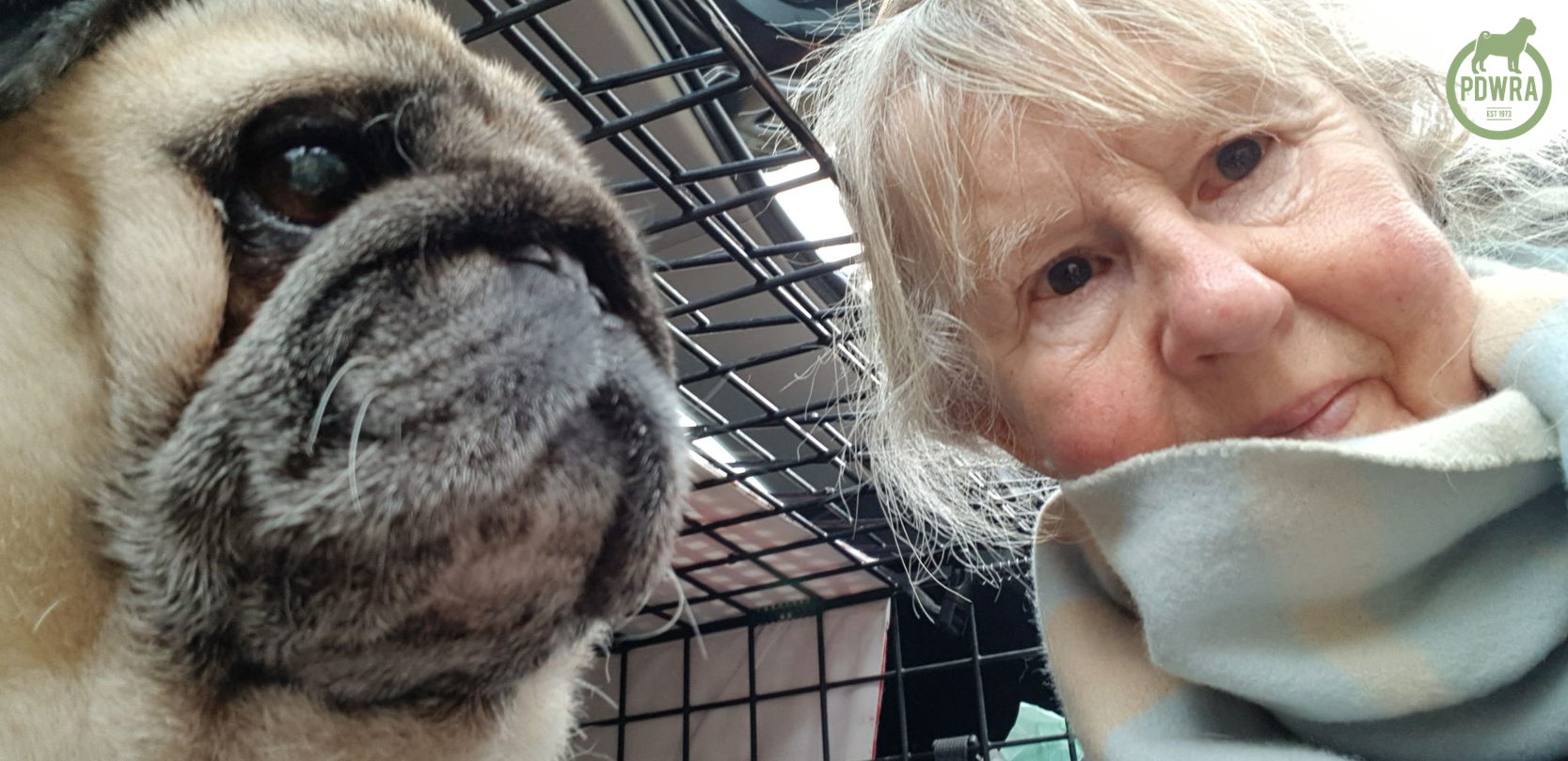
I’m retired and don’t have many family calls on my time, so can arrange the day very much to suit the pugs and myself (which I do).
Each day feels more or less the same as all the other days, perhaps the only difference between myself and many of our fosterers is that I would foster on an industrial scale. That is, if I could get away with it, so my “mentor” keeps a close eye on me!
(It’s quite a sizable grumble here, but always room for one (or two), more). How true I’ve found the 3/3/3 rule is, when introducing a newcomer, you can more or less guarantee it with the routine in place.
That’s 3 days to start to trust you, 3 weeks to relax, 3 months to make themselves fully at home and take over!
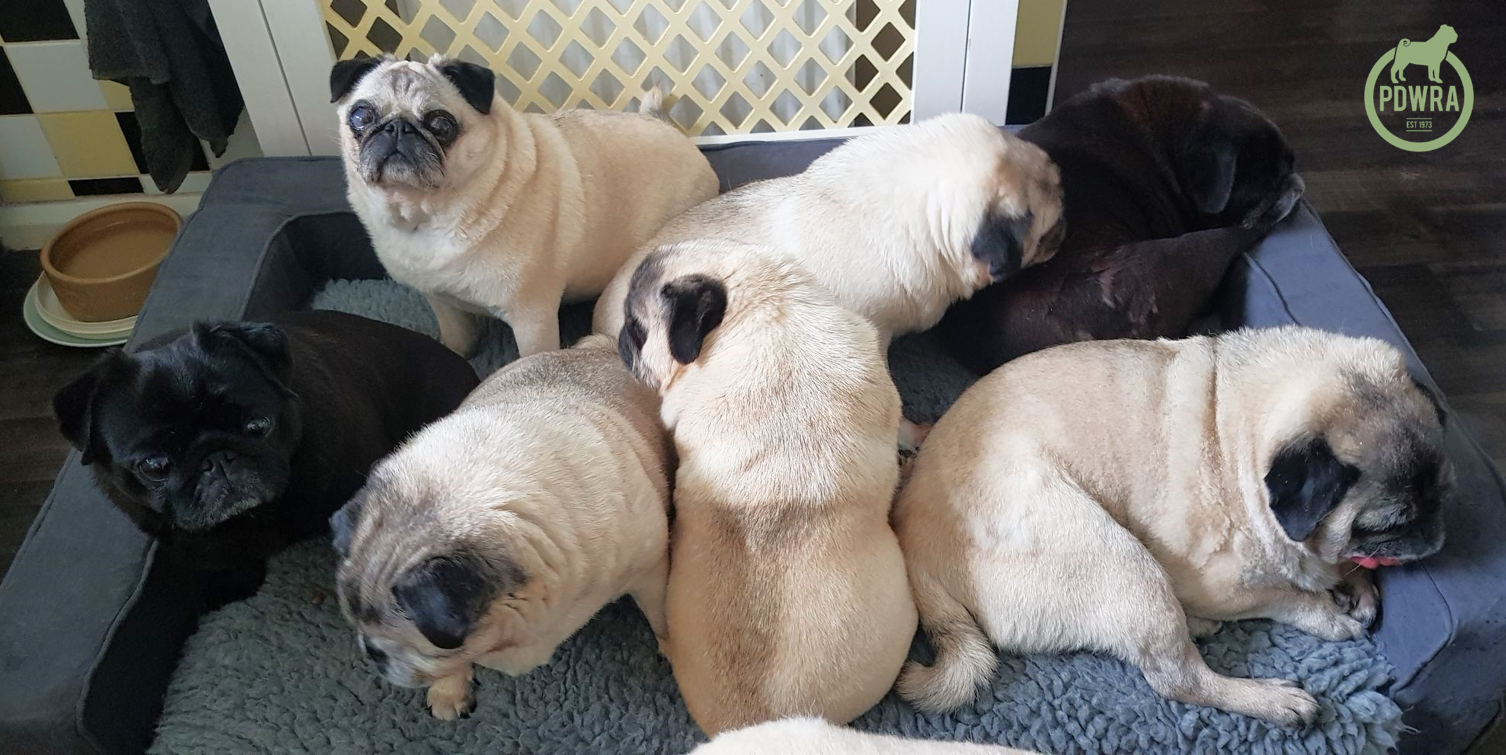
Whilst acknowledging that all pugs are different in character, they seem to respond positively to the repetition of the day, same time for meals, walks, treats and naps. This in turn generates order, so a newly introduced foster pug will soon pick up on what is going to happen and when. It not only sooths them, but makes my day more manageable.
The only exception to this is meal times, which as you all know, is of paramount importance to a pug. Although there’s a strict order in which bowls are placed, (and they all have their own designated feeding space), it can look, and often is chaotic!
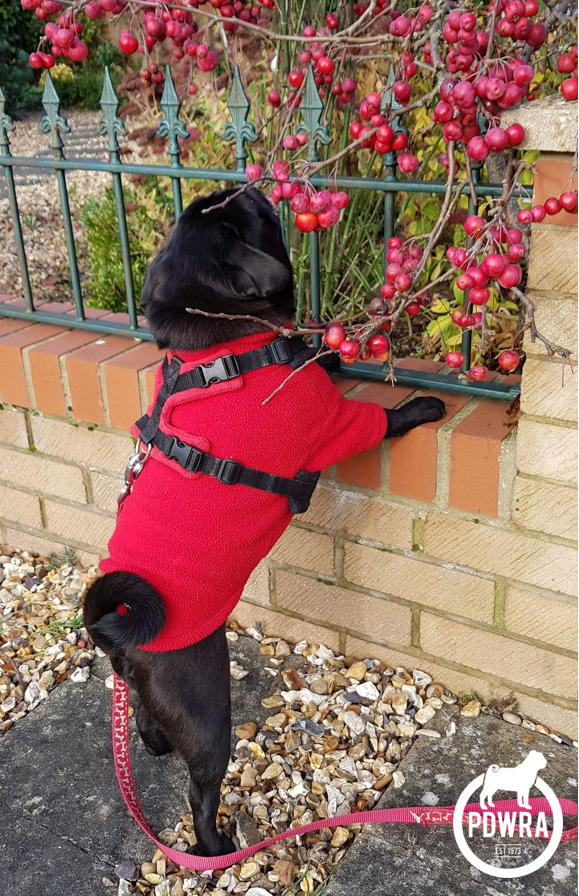
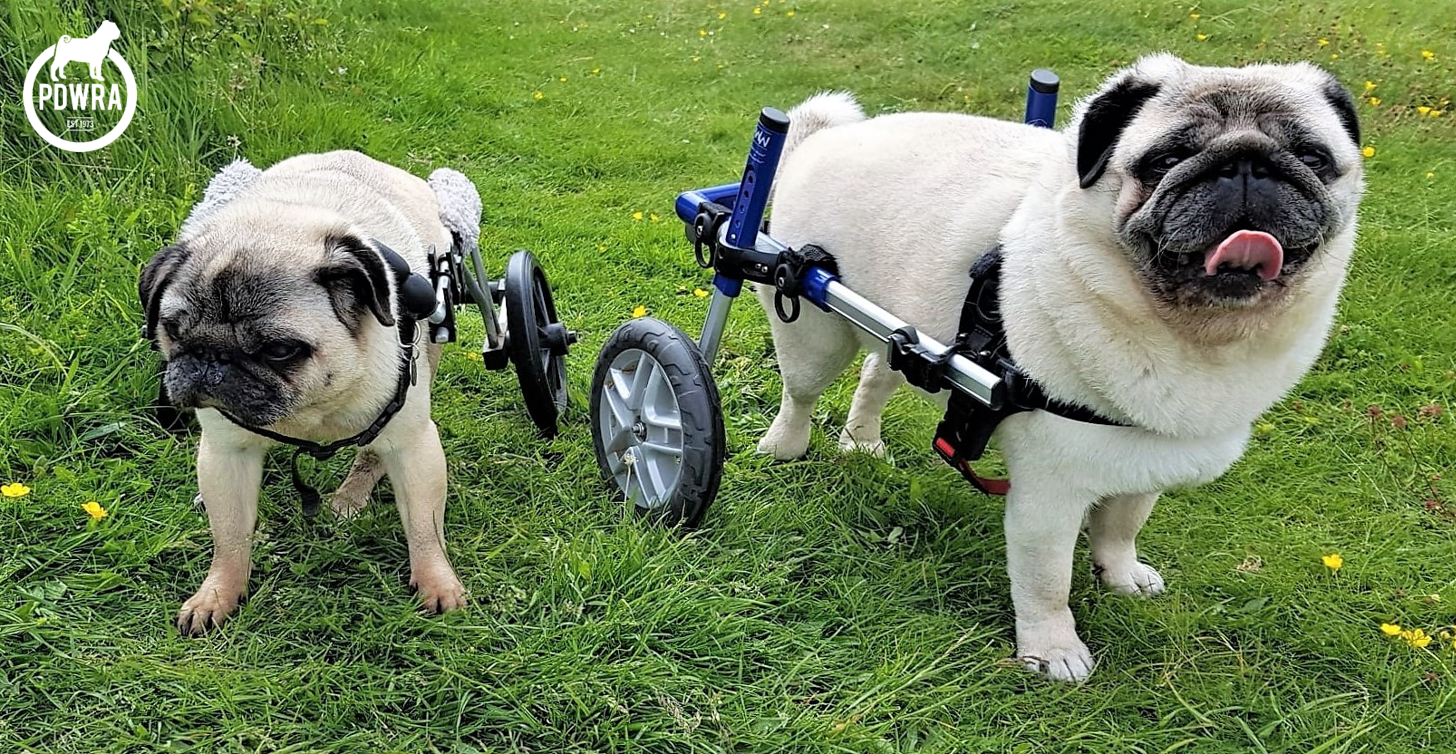
I’m a big fan of getting the pugs out for a walk, if they’re capable and want to. Some go out in the buggy (twice a day), others for a walk (three times a day), across the many safe open spaces I’m lucky enough to live near. This breaks the day up for them, keeps them healthy, and provides an opportunity to socialise with other dogs.
So many fosters come in with mobility issues, and as a consequence, have endured very restricted lives, so it’s wonderful to see them enjoying unexpected freedom. Even the “wonky” ones get an opportunity to run about, as much as they are able to, with the confidence of walking in the safety of the pack.
So, with pug walks and meals to provide, working in the garden with the pugs around me, and doing a bit of PDWRA business in between, my days drift uneventfully by …..
We wouldn’t describe it quite as modestly as Jackie does. We couldn’t do what we do without such experienced and willing volunteers like her!
If you would like to foster please see more details and apply at:
Fostering | The Pug Dog Welfare & Rescue Association (pugwelfare-rescue.org.uk)
by Yasmin | 8 Oct, 2023 | Blog, News, Rescue Stories
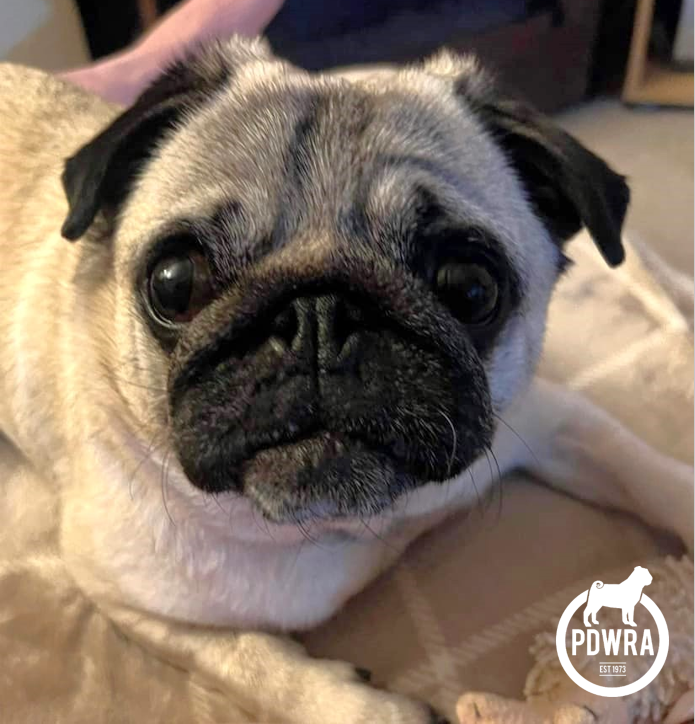
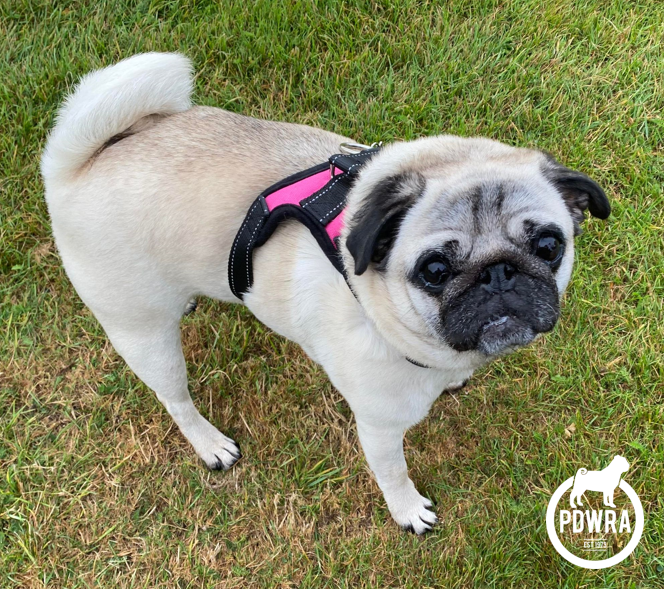
We appealed for a home for Daphne last month. A typical vibrant, fun-loving and playful 5 year-old pug who had originally lived happily with another female pug. She was surrendered to us, now showing the early signs of constrictive pug myelopathy affecting the mobility in her hind legs.
This condition is not unusual in pugs, due to their anatomy and development of their delicate spines.
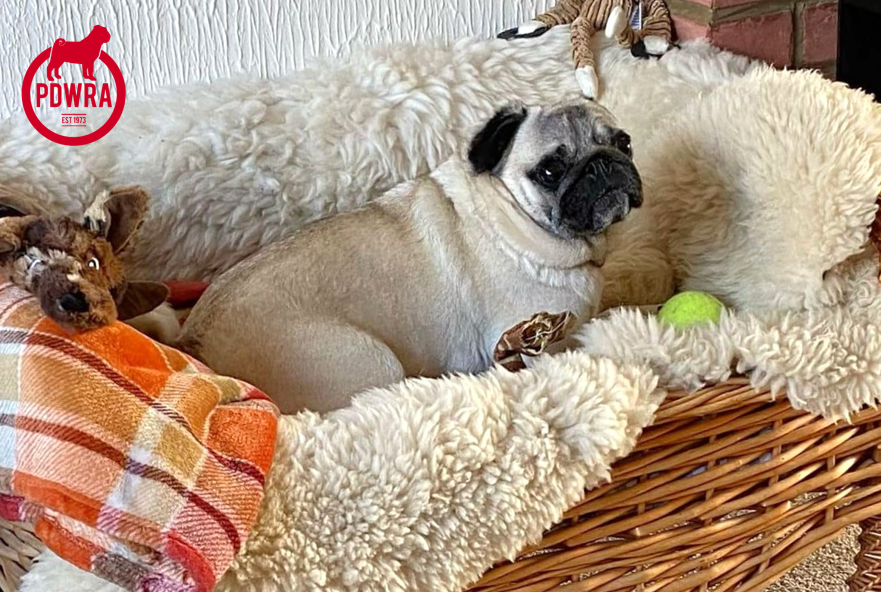
It wasn’t long before Daphne’s adopter came forward and within weeks was transported to her wonderful new home by her devoted fosterer, where she is settling in so well!
New Mum, Shirley, confirms how happy Daphne is and describes herself as her slave. Daphne is enjoying getting anything she wants including whenever she demands a walk. Though she really enjoys her breakfast she always wants Mummy’s too!
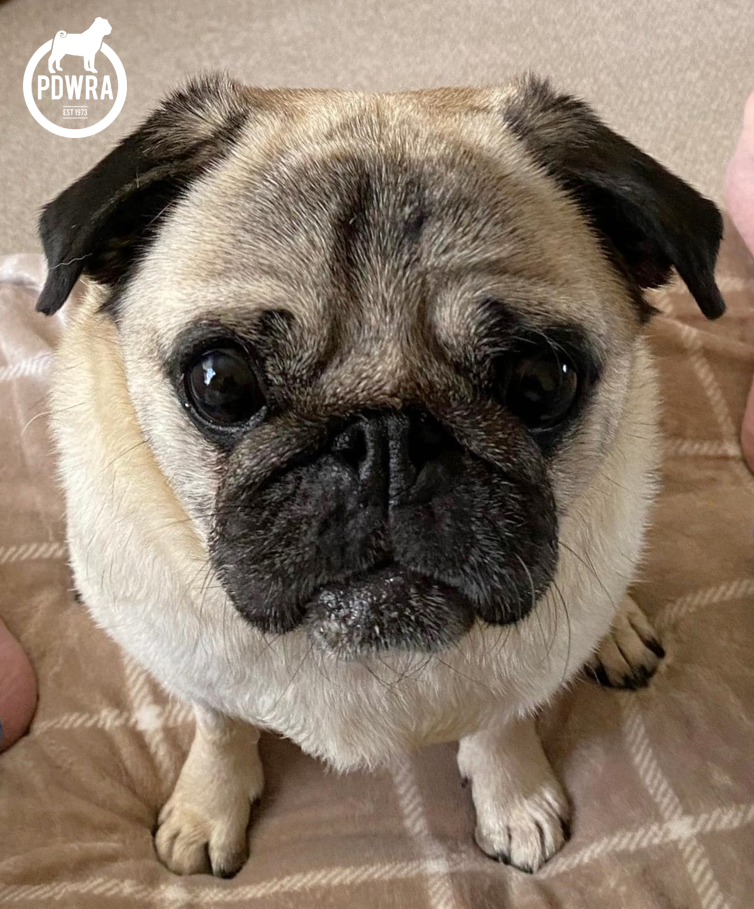
Shirley says “Daphne is so very special. She makes me smile every day. I can’t tell you how much I love her already. My little wobbly girl will be having the high life here!”
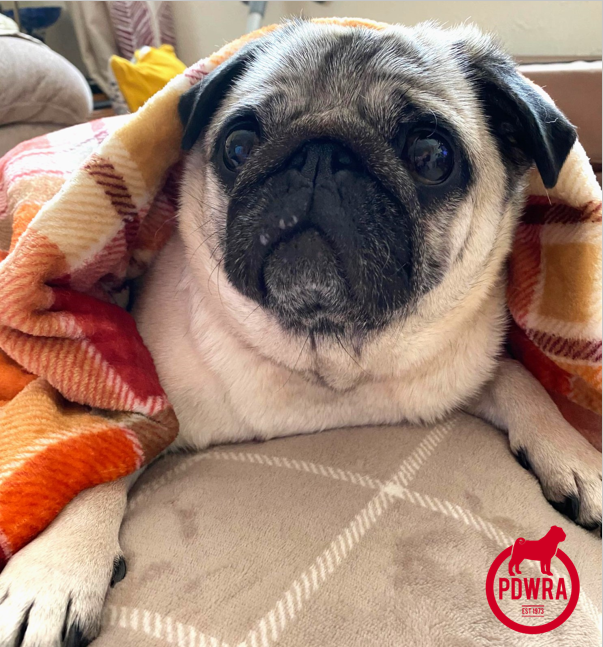
Daphne’s characteristic wobbly back legs are even looking a little stronger too from her daily walks.
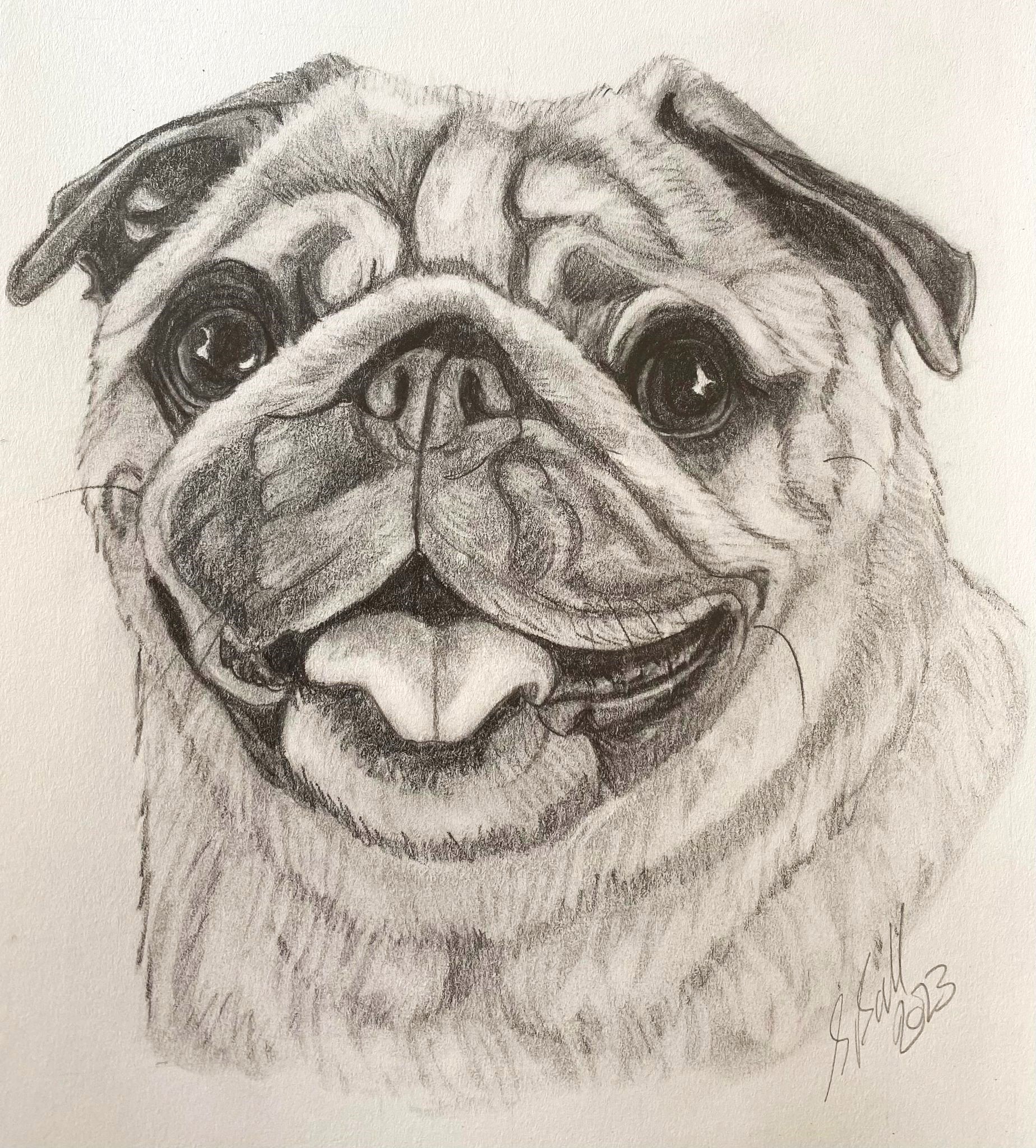
Adoring Mum, is also somewhat of an artist. She draws dog portraits donating a portion to charity. Here’s her loving portrait of Daphne!
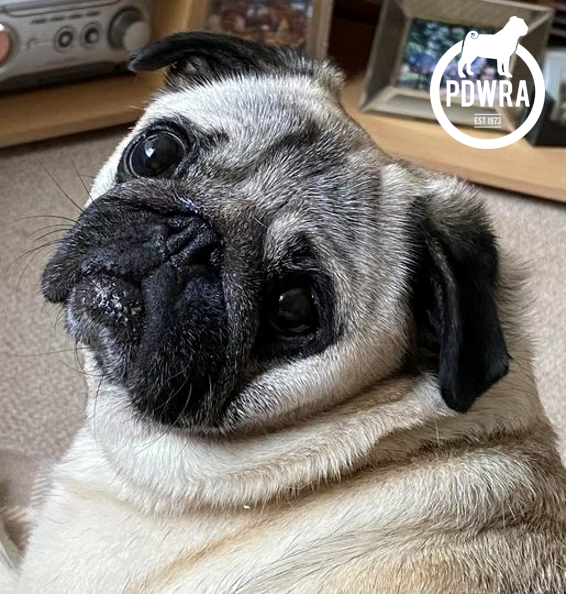
Daphne couldn’t have found a better home. There’s no looking back for this lovely girl!
You can see videos of Daphne enjoying the beach and playing with her toys here: https://pugwelfare-rescue.org.uk/could-you-adopt-young-daphne/
To find out more about Daphne’s condition, our veterinary adviser Malcolm McKee has written an excellent article that can be found at: https://pugwelfare-rescue.org.uk/spinal-conditions-in-pugs/
If you would like to adopt a pug like Daphne, or any of those we have in our care, please apply at: https://pugwelfare-rescue.org.uk/adopting-a-pug/
by Yasmin | 4 Oct, 2023 | Blog, News, Rescue Stories, Volunteering
Article by Volunteer Nicola, a Veterinary Nurse and Director of Tenderpaws Vets in West Wickham, Kent.
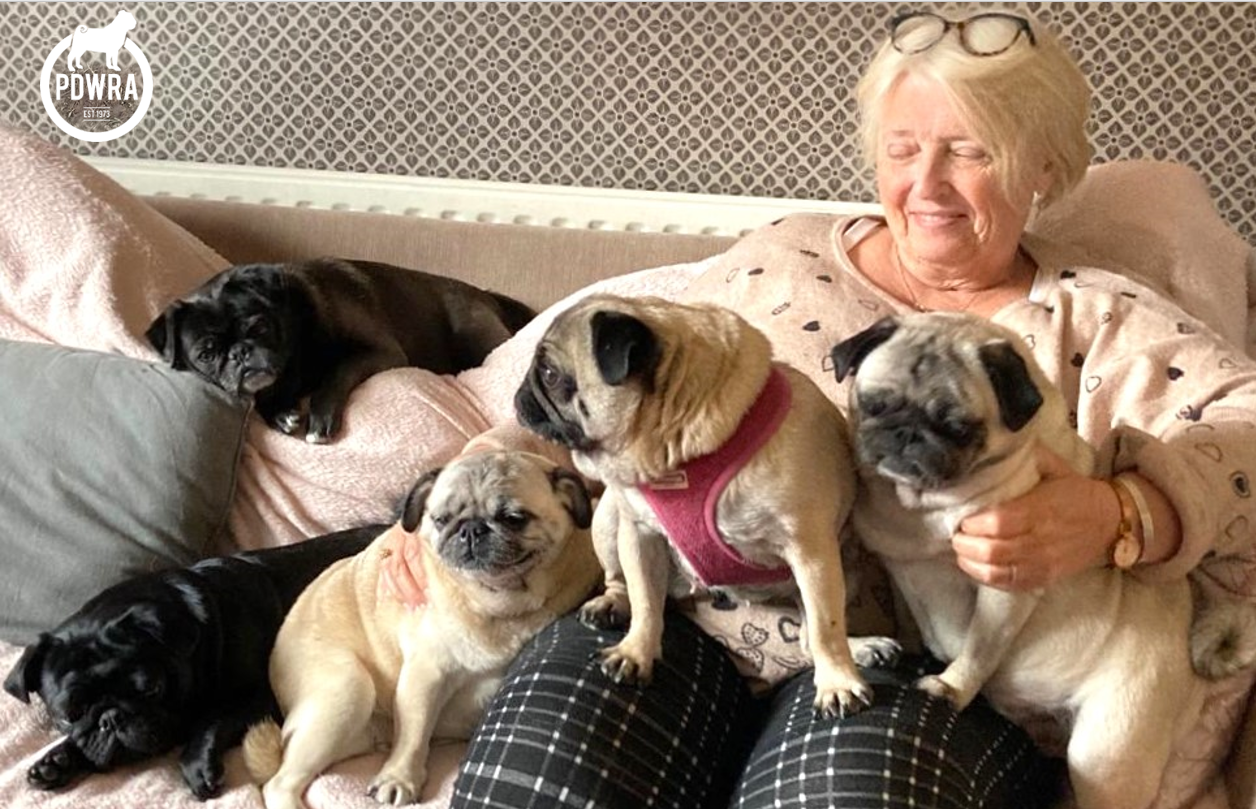
My passion is pugs! I’ve grown up with them and in some way or another have supported Pug Welfare through those years. That leads me to say I have 8 pugs! 3 black, 4 fawn and 1 white called Charlie. Each have special needs and requirements 😂. All have different characters especially Charlie.
The circumstances around Charlie’s surrender were difficult, as he was terrified of men and would start fights with the other dogs in the surrenderers’ home. He’s a wonderful pug though, and I wouldn’t be without him!
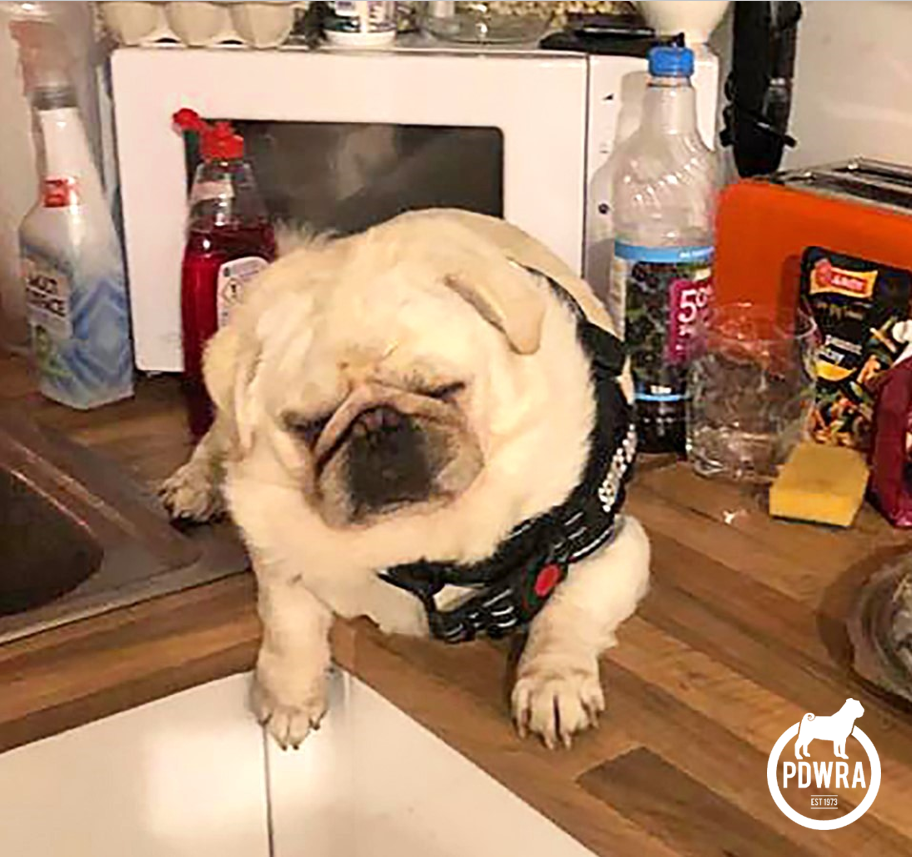
I recently took in another troubled dog which wasn’t able to settle in a previous foster placement and showed signs of aggression. Eventually I found him a fantastic home where there were no other dogs and he’s very happy now.
I’ve fostered many pugs for the PDWRA but I’m generally a hopeless fosterer and have kept most of them! Over the years I’ve also helped with transporting pugs and continue to help out with problem solving both at home and at work.
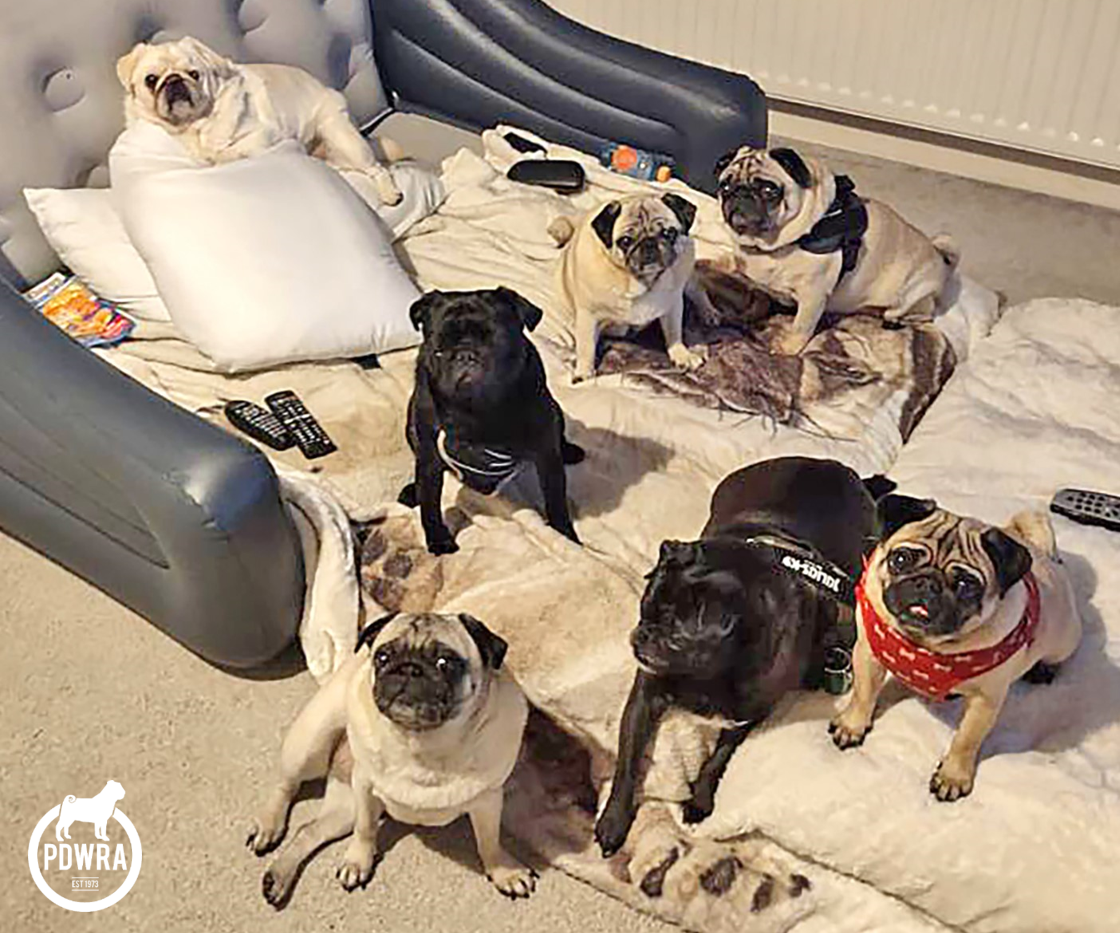
As well as helping out the PDWRA in the practice wherever I can, I also do home checks and make follow-up visits for pugs placed in adoption.
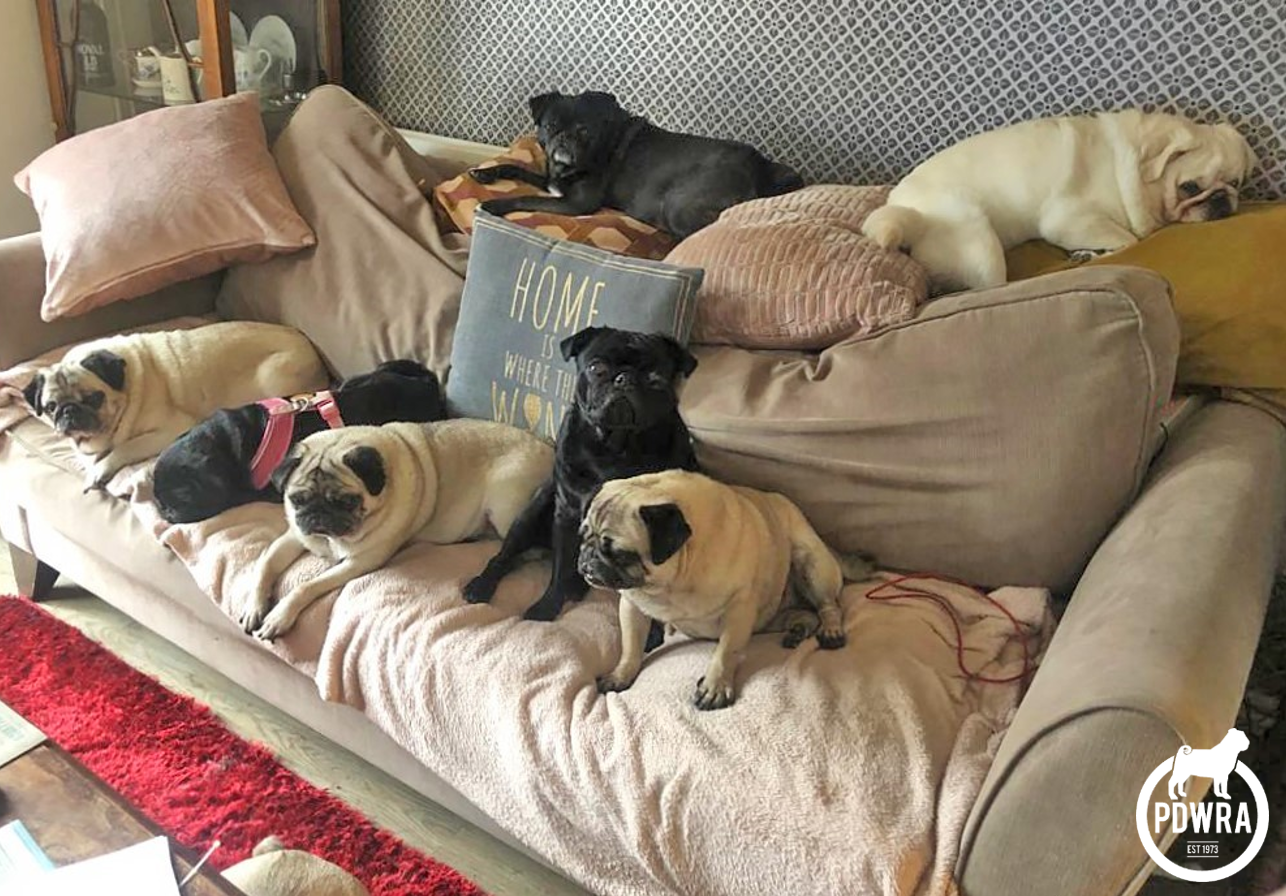
I feel as though I’m privileged to be able to help a charity which gives vital love, care and support to many needy pugs!
Nicola.
If you feel you could foster or volunteer as Nicola describes, please see further details at the following webpages:
Fostering | The Pug Dog Welfare & Rescue Association (pugwelfare-rescue.org.uk)
Volunteering for PDWRA | The Pug Dog Welfare & Rescue Association (pugwelfare-rescue.org.uk)
by Yasmin | 1 Oct, 2023 | Blog, News, Rescue Stories
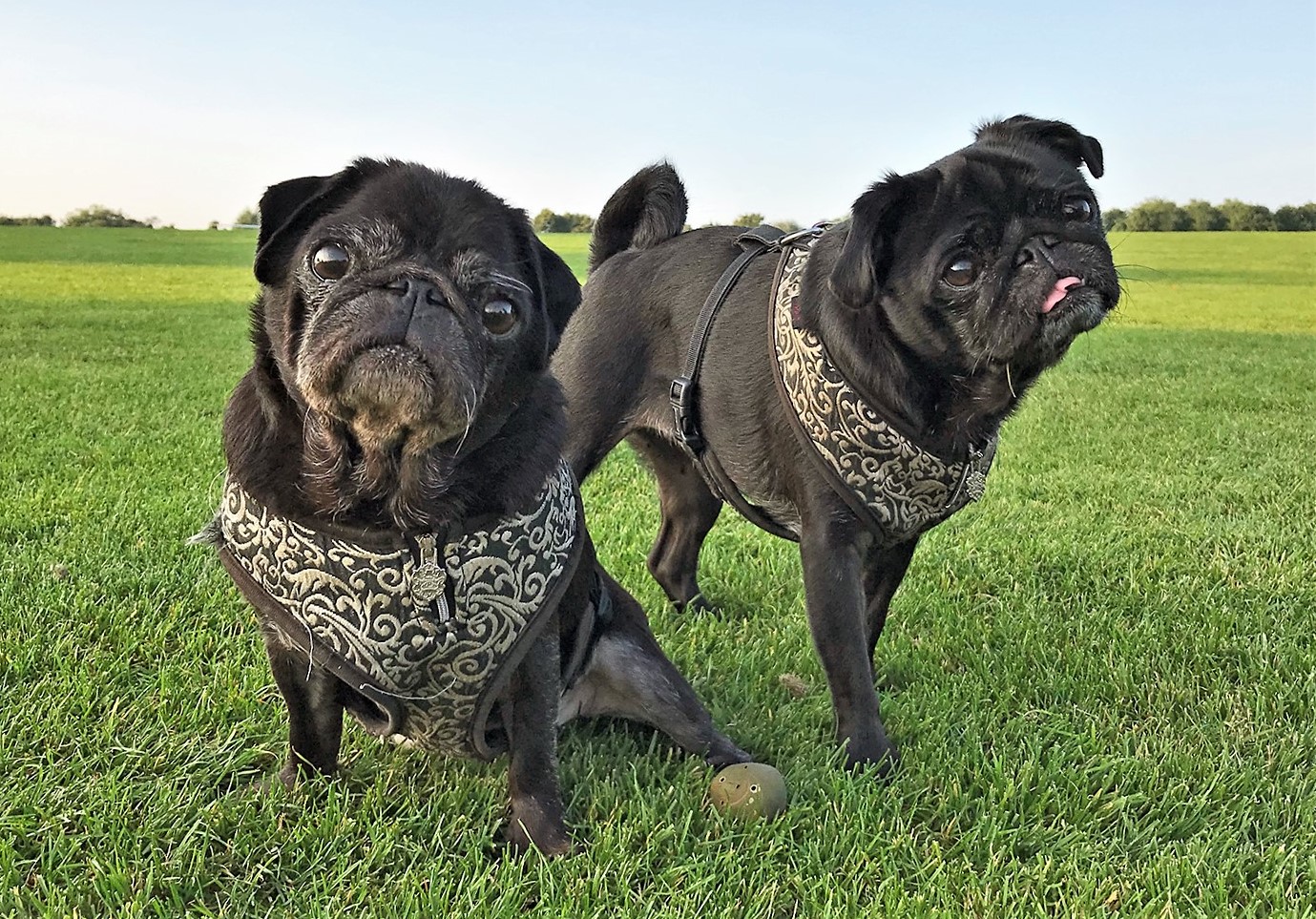
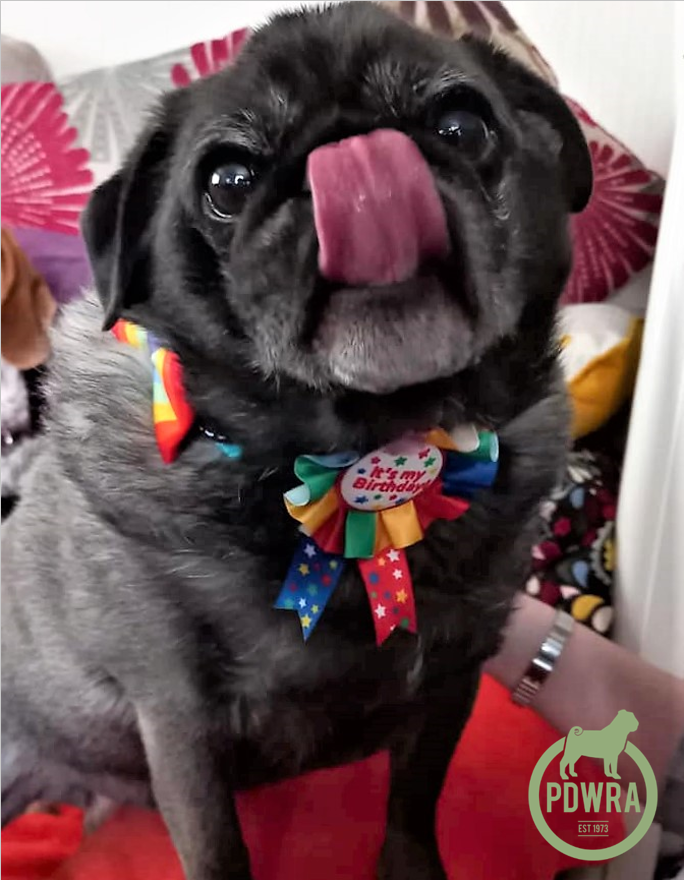
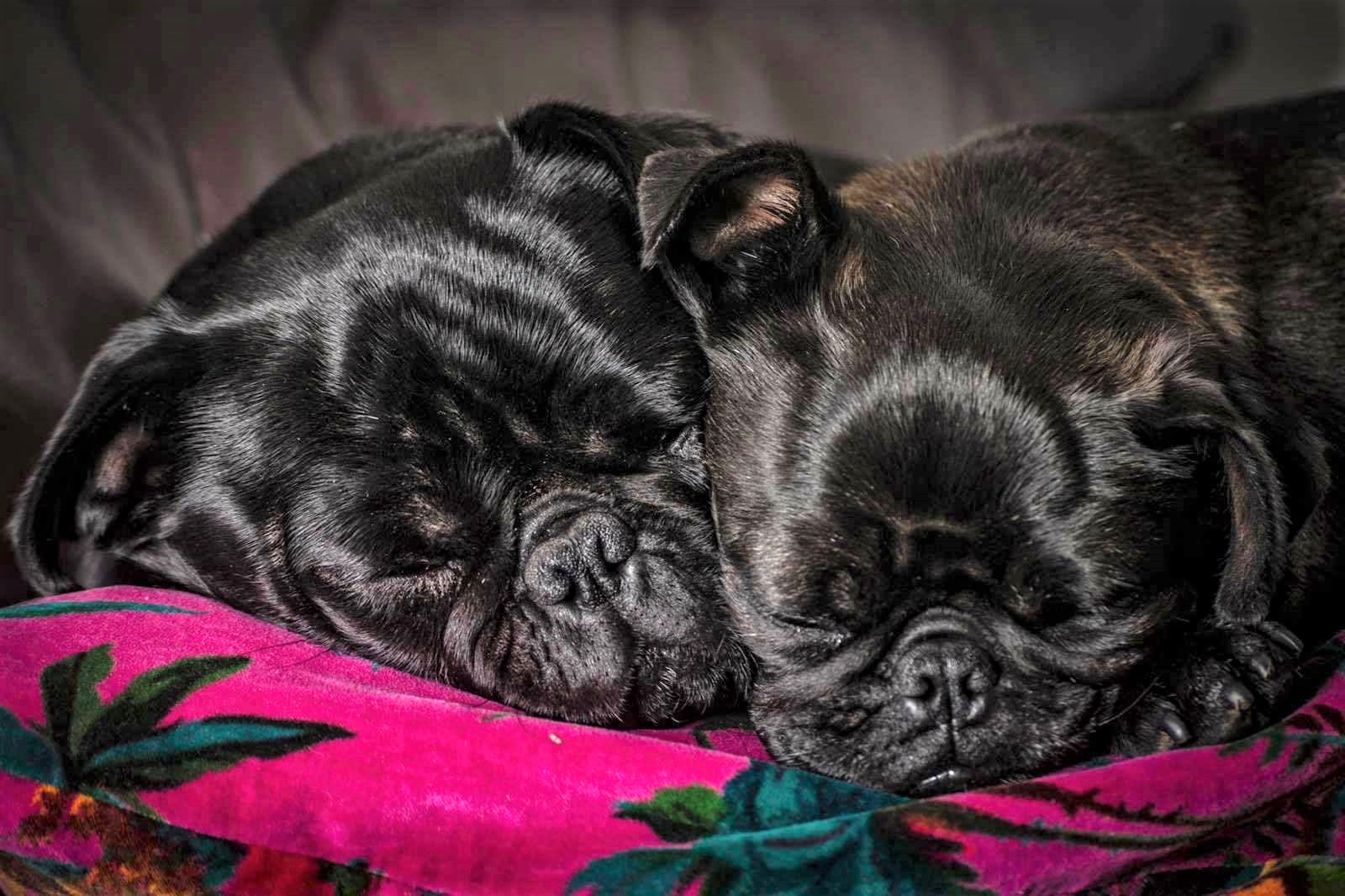
It’s the 1st October, National Black Dog Day!
On the same date each year, it’s a day to celebrate black dogs, originally created to raise awareness of how they were often passed over in rescue shelters and to break the historic stigma surrounding their colour.
However, we know black dogs make just as loving and loyal pets as any other colour. Why wouldn’t they? In fact, they’re unique in character and very special. Black pug owners will know that!
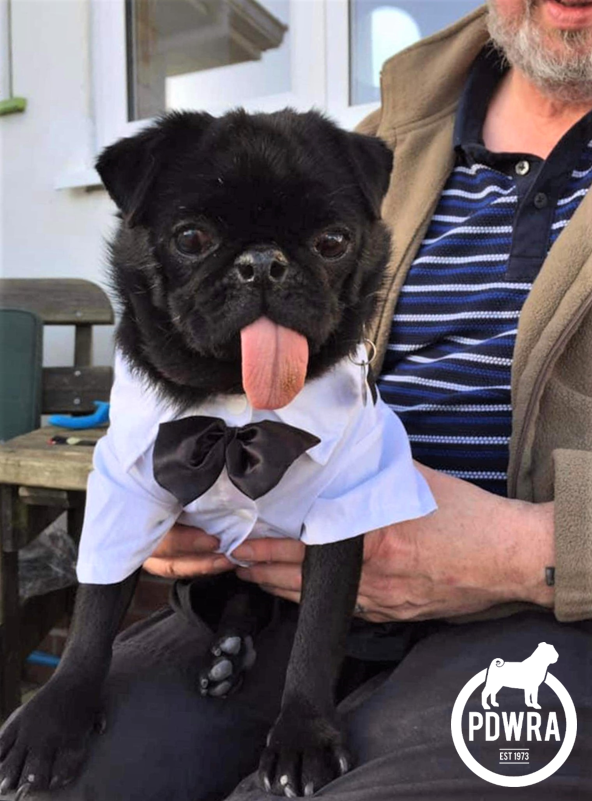
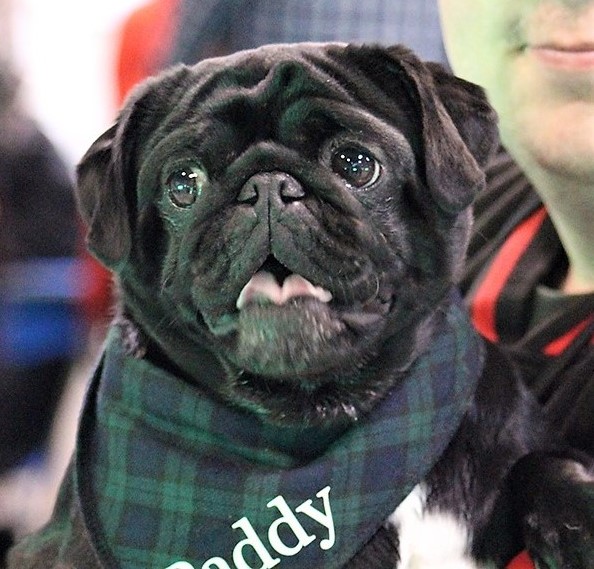
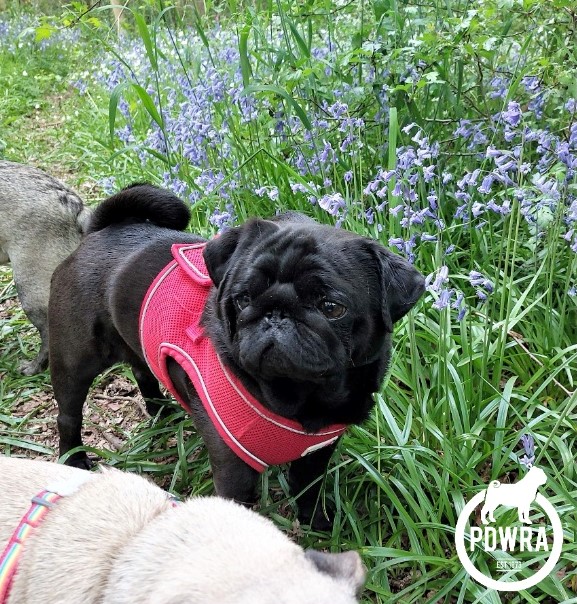
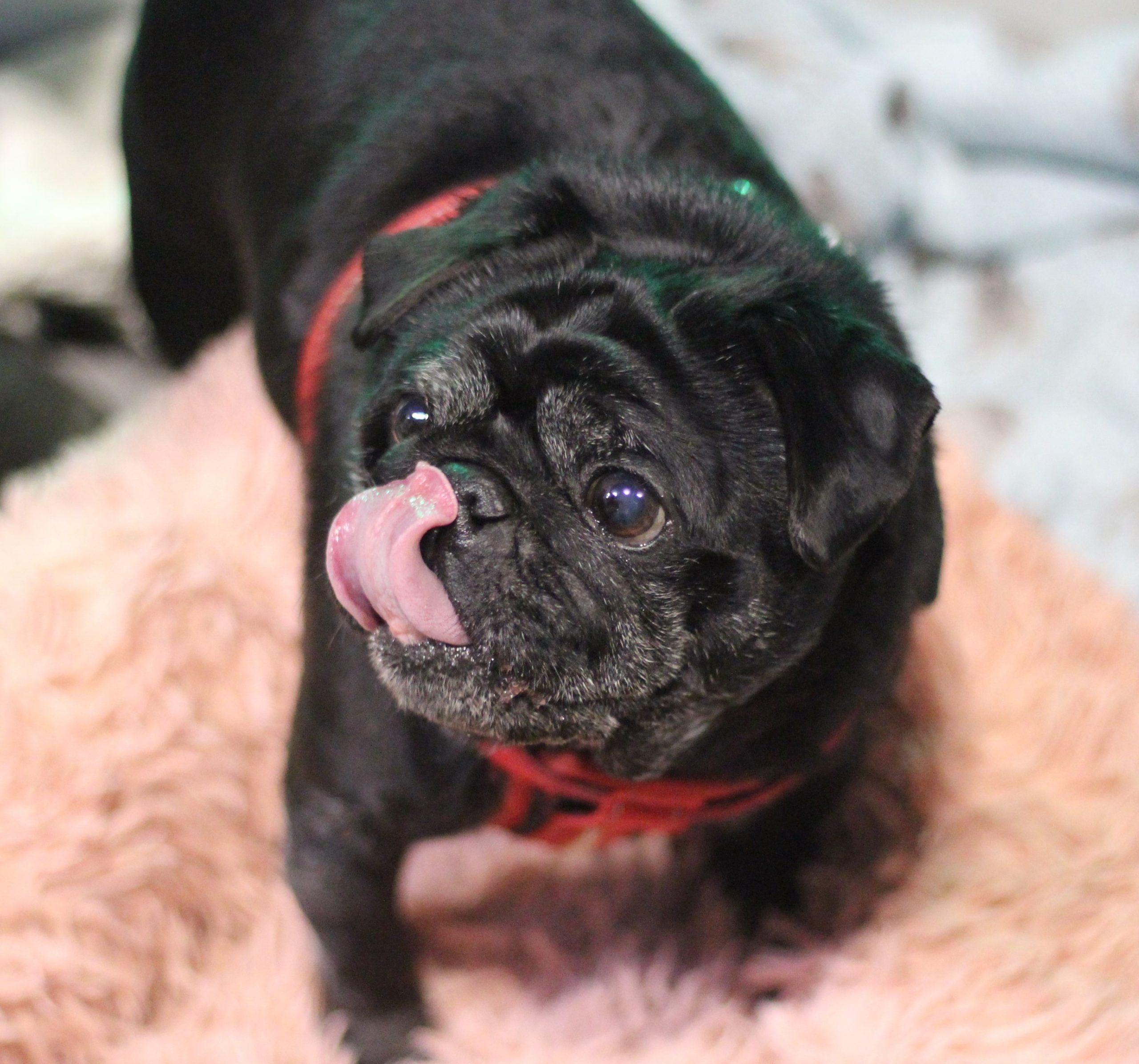
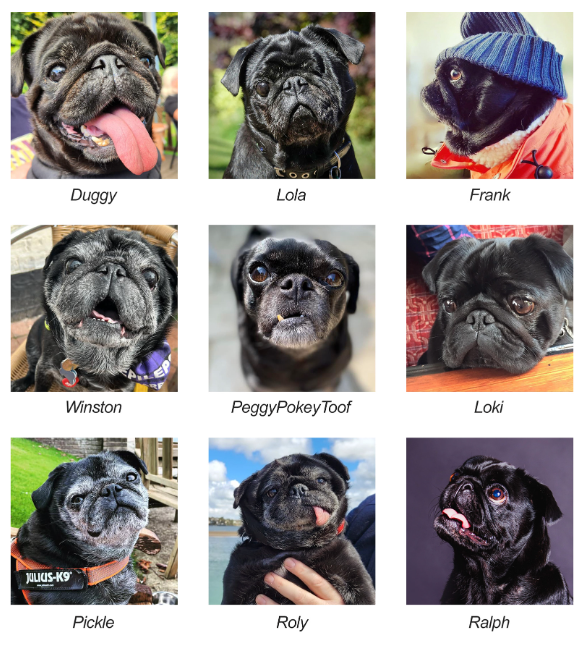
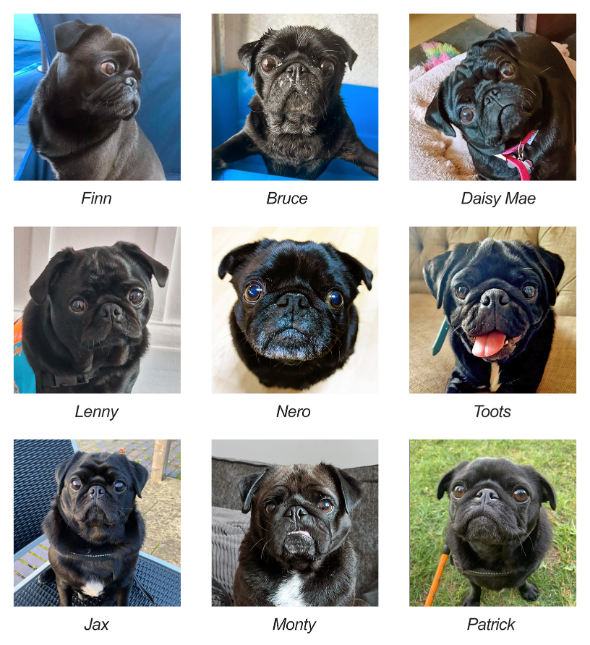
Here are a few gorgeous black pugs that have featured in our rescue news and stories: