
The Welfare Association, as it was known in the early days began in 1973 under the umbrella of the Pug Dog Club and at the wish of the members at the AGM that year. Since then, it has become a registered charity.
Originally, a number of ladies who met at dog shows became concerned as to what might happen to pugs should their owners become unable to care for them. It was often possible to rehome them through contacts made via pet pug owners who had bought their own pugs originally from these ladies. In those days, buying a pug was quite a difficult process and people had to go on waiting lists and even then, might not necessarily be fortunate enough to get one.
Vet bills were supported by funds raised by the ladies from little garden parties held at their own homes.
Eventually, they realized that their little group needed to be formalised and as they were all members of the Pug Dog Club, turned to the Club for its approval.
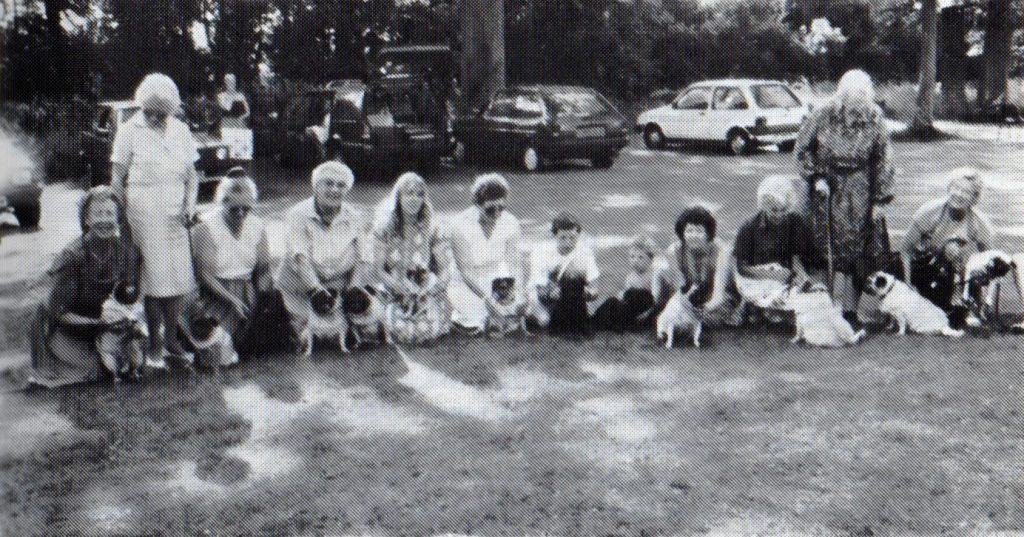
The photograph shows Mrs. Inge (with walking stick) at the 1987 Garden Party held at Crowhurst along with guests
These ladies were Miss Ella Clancey from Tyne & Wear: Mrs. Vivien Dudley, London; Mrs. Mildred Inge, Surrey; Mrs. Jean Manifold, Hertfordshire; Mrs. Theo Greenhill-Reid, East Lothian, Scotland; Mrs. Margaret Statham, Berkshire; Mrs. Ena Tullett, Sussex and Mrs. Sue Welch, Surrey. Mrs. Inge was the Chairman/Secretary and Mrs. Statham, the Treasurer.
In the early days, long before the internet, the rehoming operations were managed with a large map of the UK with flagged pins indicating “trusted and known” helpers with a different pin to indicate where the needy dog was and another for the personally approved home where the dog was to be transported. Of course, there were no mobile telephones. Where landlines existed, calls were made after 6pm for the cheaper rate and letters were handwritten, although, sometimes typed and promptly delivered, usually, the next day. If a long journey was involved, for safety’s sake, most people met at Little Chef cafes and the pug was handed over to the next volunteer driver, until the pug was safely delivered to its new home.
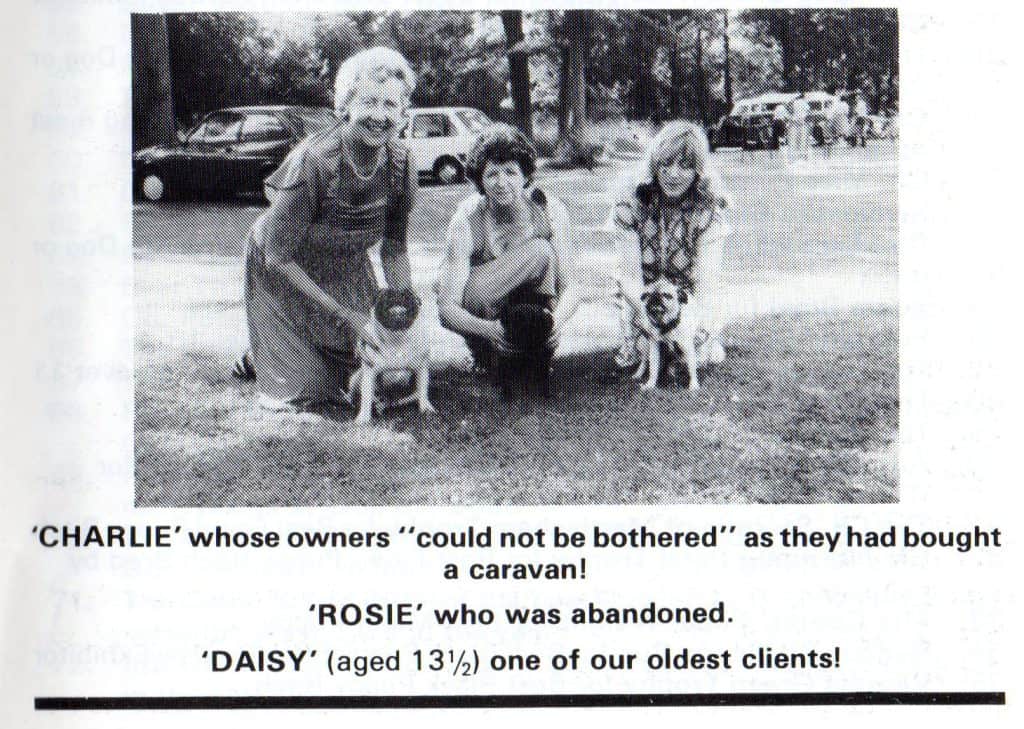
Section from PDWRA Promotional Poster circa 1987
The pug was not that popular in the early days of rescue, but in its first 10 years, 180 pugs were rehomed, rising to 300 just 5 years later; the ages varying from 5 weeks to 12 years old, including a one-eyed dog, a one eared dog and one with three legs.
At the 1996 PDC AGM, the membership requested that the PDWA be updated. The updated Constitution was approved the following year and accepted by The Charity Commission.
In 2002, the Trustees formed a separate section known as Friends of Pug Welfare which proved very popular and successful, offering members from all over the country the opportunity to assist should they so wish.
Since its inception, there have been many changes in the way of modern management and, of course, Trustees, many of them well -known in the pug world. It is thanks to the generous bequests over the years, the original idea of rehoming pugs in need remains almost unaltered.
Alison Mount
Vice President
Pug Dog Club
March 2026