by Yasmin | 28 Oct, 2022 | Blog, Rescue Stories
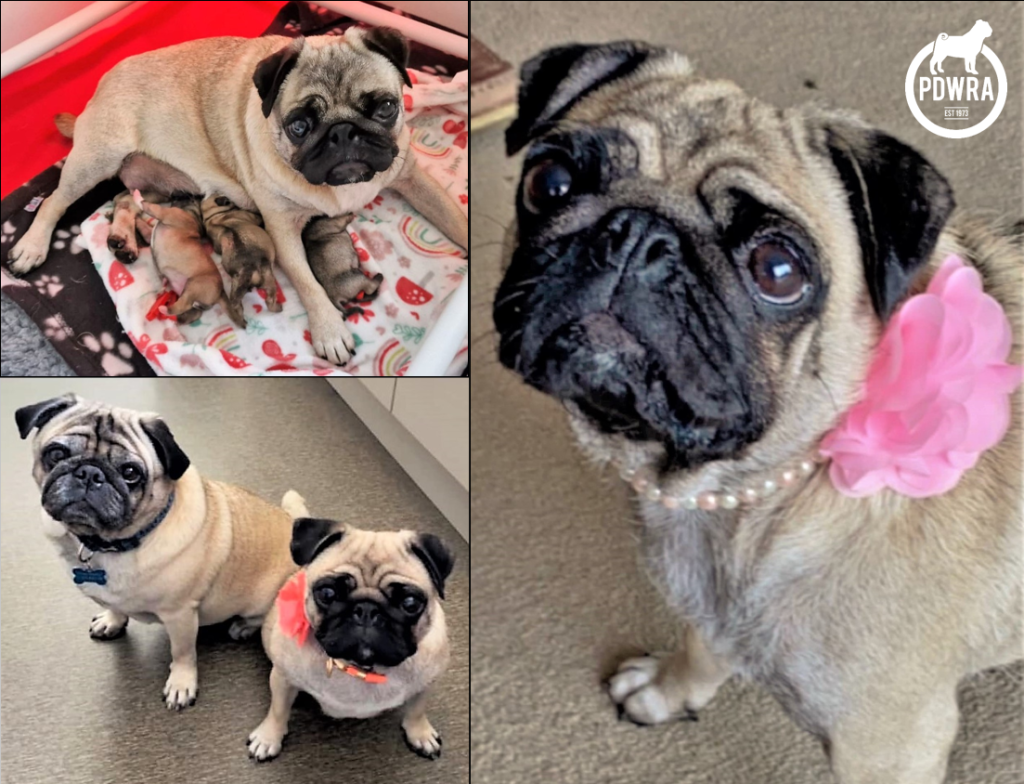
While we followed Delilah’s pups progress, starting their adventures in their new homes, many of you have asked how Delilah is doing. We reported that she may need BOAS and to be spayed, when she was strong enough and both procedures took place last week.
We know how worrying it is whenever our pugs go through surgery, and there was an anxious 24 hours afterwards when her recovery required assistance. Thankfully she pulled through and is now at home doing really well with her wonderful foster Mum and resident pug, Doug, who looks like he could be Delilah’s forever brother!
“Delilah’s improved massively this week”, her foster Mum says, “She’s resumed walks and her breathing is fine”.
We couldn’t wish for more for her, could we?!
Delilah’s previous post: Delilah’s Puppies doing well! | The Pug Dog Welfare & Rescue Association (pugwelfare-rescue.org.uk)
by Yasmin | 20 Oct, 2022 | Blog, News
We need Volunteer Area Coordinators (VACs)! They are the backbone of the Charity, helping to coordinate between pugs being surrendered, and finding their new homes.
Here is an interview with Paula Parke: Volunteer Area Coordinator.
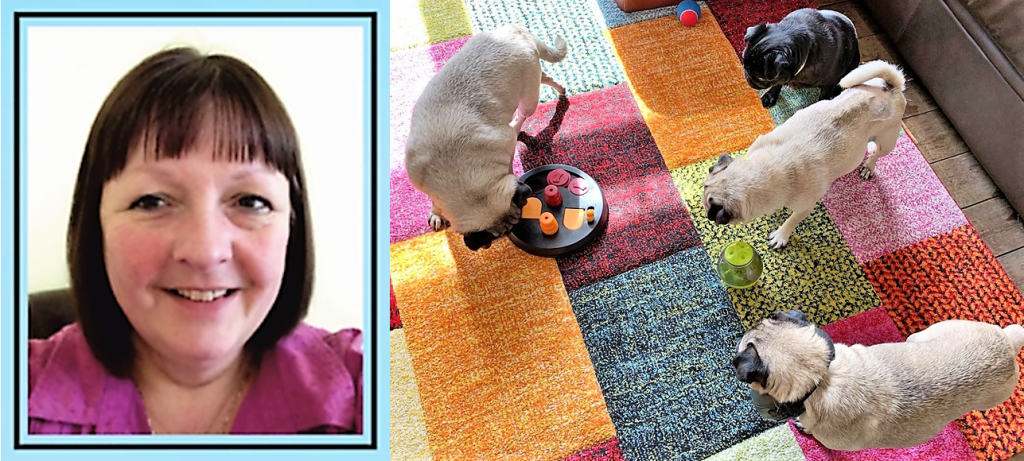
Paula, how did you start volunteering for the PDWRA?
I have been active in dog, small animal, and farm animal rescue for most of my life. I got my first pug in 2009 and fell in love with the breed. In 2011 I got my second pug they have been my constant companions ever since. In 2018 a change in my personal circumstances meant I was able to consider volunteering again and whilst looking at options I came across Pug Dog Welfare online and decided to apply. Over the years I have lost track of how many pugs I have fostered or placed in new homes and along the way I have acquired two more lovely girl pugs as long-term fosters. Seeing the pugs go to new adoptive homes is so rewarding, brings so much pleasure, and makes all the hard work worthwhile.
What does a Volunteer Coordinator do?
A Volunteer Coordinator (VAC) essentially helps coordinate public interaction with the charity in the region they look after. This ranges from taking calls from people surrendering their pugs wanting to hand in their pugs or asking for advice, coordinating taking in placing the pugs into new homes, doing organising, taking part in, and approving or rejecting home checks results for potential adopters, and organizing fosterers, as well as managing transporters and other volunteers, and overseeing and approving payments for vet care to them other local volunteers. The VAC is also responsible for keeping the trustees updated on activity in their areas and helping to promote the achievements and needs of the charity by contributing towards our social media and other publications.
What makes a good Volunteer Coordinator?
A good Volunteer Coordinator must be dedicated, committed, passionate, and have excellent organization skills since they generally manage more than one multiple pug rehoming cases and volunteers at any one time. In addition, they must have exceptional communication and listening skills to handle the needs of people who maybe are going through a sensitive time, either surrendering or taking on a new pug. Flexible working including some weekends and team working skills are necessary attributes also.
Who does a Volunteer Coordinator work with?
Apart from their own local applicants, volunteers, vet services, other dog rescue charities. A Volunteer Coordinator works with their PDWRA counterparts across the UK and gets support from the trustees and Lead VAC coordinator Paula Parke and Vet advisors Helen and Malcolm McKee.
How much time does it take?
This very much depends on the amount of time a volunteer can give and the volume of demand for PDWRA help in the area they cover. Most VACs give around 5-6 hours a week, but this can vary enormously depending on how much people want to get involved. If you are interested, why not have a chat with us about what is involved?
You can email the charity on: secretary@nullpugwelfare-rescue.com
Plus, there is also more information on the role at: Vacancies | The Pug Dog Welfare & Rescue Association (pugwelfare-rescue.org.uk)
You can email the charity on: secretary@nullpugwelfare-rescue.com
Plus, there is also more information on the role at: Vacancies | The Pug Dog Welfare & Rescue Association (pugwelfare-rescue.org.uk)
by Yasmin | 20 Oct, 2022 | Blog, News, Pug Health
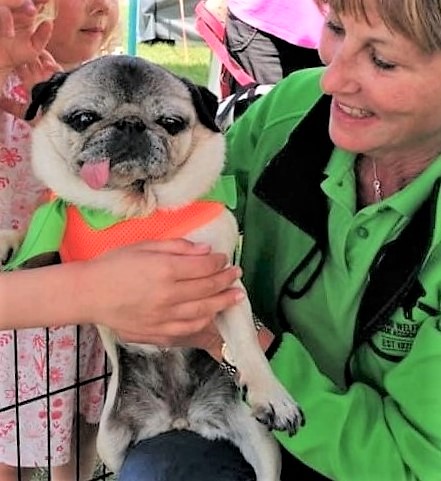
Hello everyone!
My name is Helen McKee. My husband Malcolm, and I are retired vets and we have been voluntary Veterinary Advisors for the Charity since 2018.
We set up our own Referral practice over our careers; Malcolm was previously a specialist orthopaedic surgeon and neurologist, whereas my background is both primary small animal, and latterly, Governmental work in Animal Health and Welfare.
We carry out the role of Veterinary Advisors for the PDWRA as we are both passionate about the health and welfare of pugs, who, through man’s making, have made pugs very prone to a large number of health issues.
In each of our newsletters we will discuss a particular health problem associated with pugs. Here, I am going to discuss the rather sensitive topic of a pug’s weight.
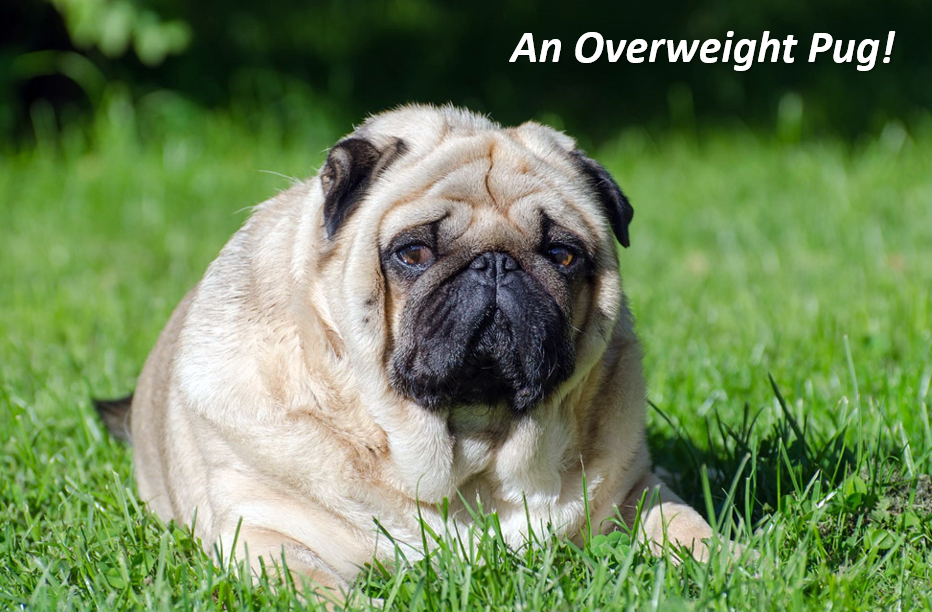
When a pug is overweight, it becomes a health issue in itself. It also exacerbates health issues that pugs are prone to including breathing, spine and leg problems. Obesity in dogs is also now classed as a welfare issue by DEFRA under their welfare legislation.
It is very easy to overfeed a pug; with their soulful eyes and appetite like a Labrador, they can trick you in to feeding them more than they need. Pugs are only little dogs and actually only need a small amount of food. Recommendations on the back of dog food are a guide only and pugs often need less than recommended. Basically, if your dog is putting on weight then it is eating too much, and the amount of food needs to be reduced.
I have attached a link to an article on our website ‘Fit not Fat’ which shows the ideal weight of a pug through how it looks; it’s not about weight as such, but a Body Condition Score (BCS) which should ideally be around 5/9. As you can see by the illustrations, 5/9 is nice and slim.
FIT not FAT! | The Pug Dog Welfare & Rescue Association (pugwelfare-rescue.org.uk)
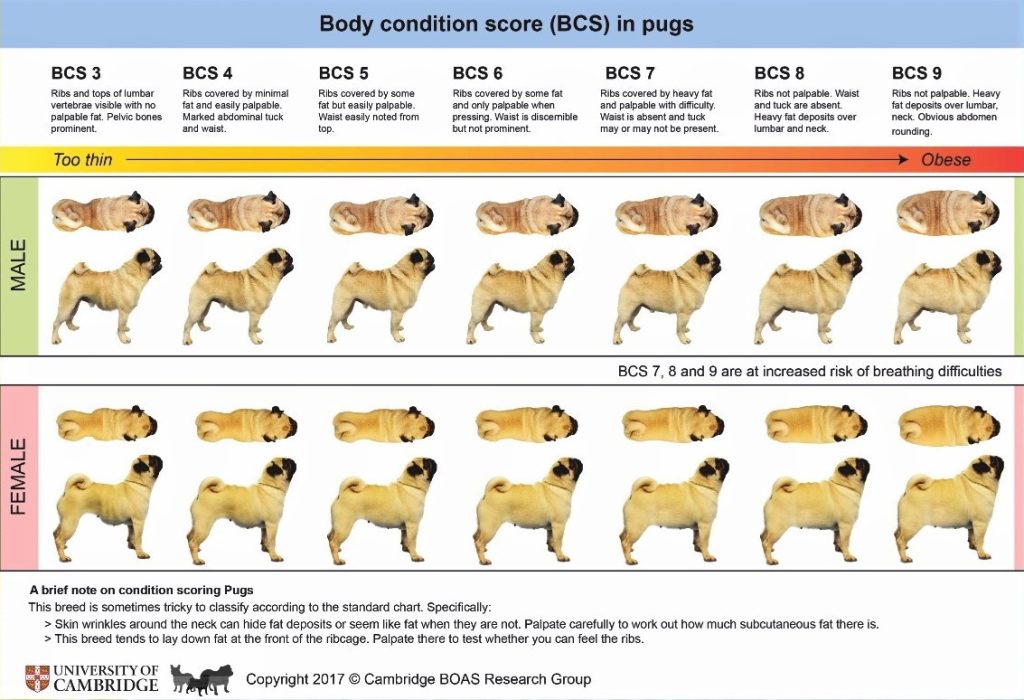
This chart is issued by the University of Cambridge (2017 Copyright) and shows us how our pugs should look.
If your pug is kept slim, it will be so much healthier and happier!
Helen McKee (MRCVS)
by Yasmin | 19 Oct, 2022 | Blog, News, Rescue Stories
The Latest News on Quinn! | The Pug Dog Welfare & Rescue Association (pugwelfare-rescue.org.uk)
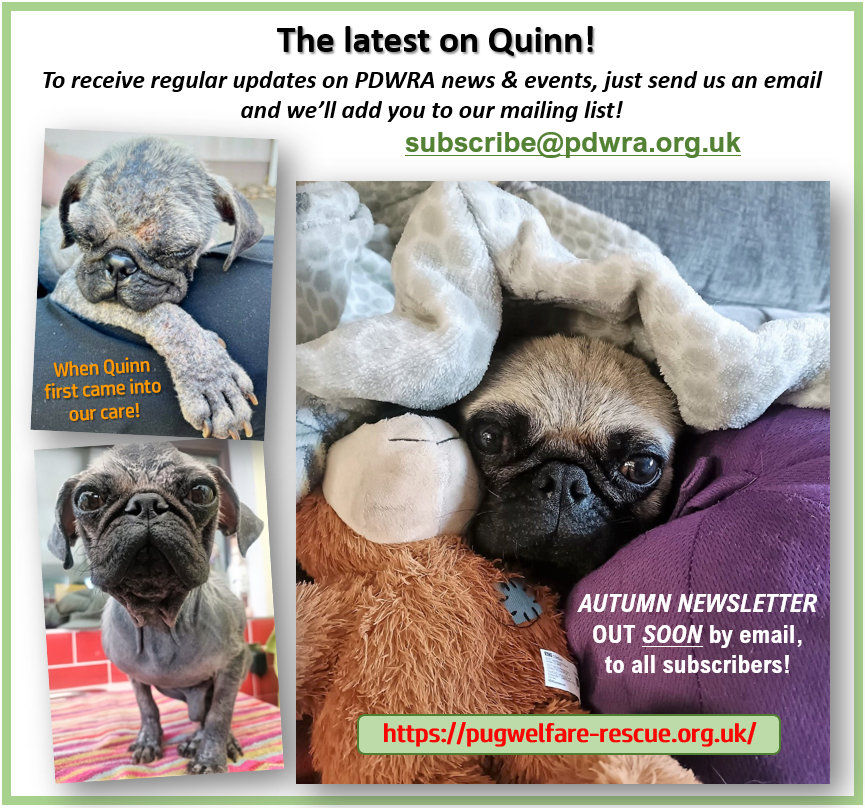
We’ve kept you updated about young Quinn, gently improving with dedicated care after his terrible start in life. Quinn’s progress, aided by your generous support! | The Pug Dog Welfare & Rescue Association (pugwelfare-rescue.org.uk)
Since then, Quinn has experienced a lot of ‘firsts’. These include simple things like playing with toys and chewing them, going out on his own into the open space of gardens and sitting with his fosterer, Kellie’s pugs, from preferring his own company. He’s even found a slight bark!
Quinn has also moved away from hourly medication and his hormones kicked in following receipt of proper nutrition, which was a massive achievement for his little body, so he’s well enough to be neutered and have the X-rays he needs to assess his spine as he’s believed to have been kept in cramped conditions, such that he wasn’t very aware of his legs or what his body could do! 😩
For a full update on his progress and potential future needs, with latest photos, why not subscribe to our new digital newsletters? Just send an email to: subscribe@nullpdwra.org.uk
You will be included in our regular mailings and can unsubscribe at any time.
Donating to Pug Dog Welfare | The Pug Dog Welfare & Rescue Association (pugwelfare-rescue.org.uk)
by Yasmin | 9 Oct, 2022 | Blog, Rescue Stories
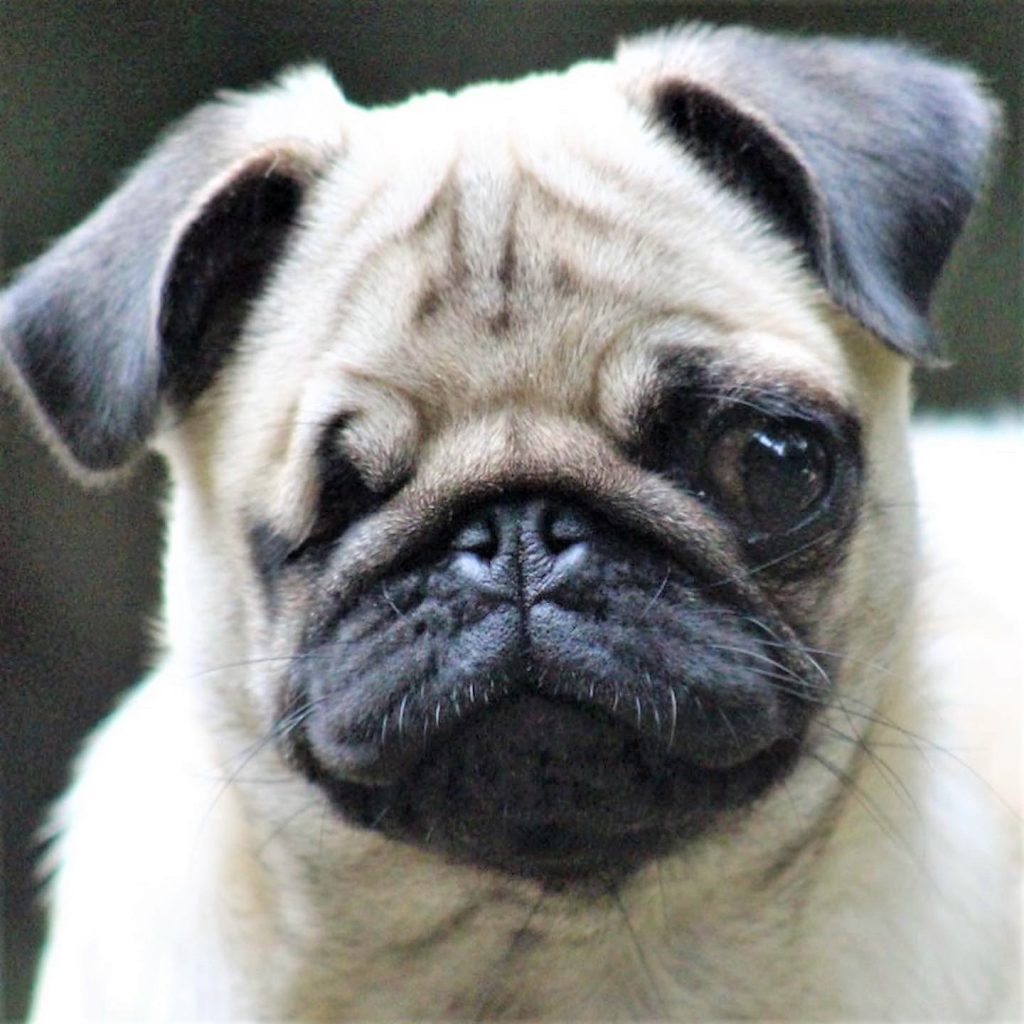
Peggy came to the PDWRA earlier this year and needed emergency surgery to remove her right eye, which was ruptured due to trauma. She was only eight weeks old!
Thanks to the PDWRA network, she was operated on within two days and recuperating with a foster family by the end of the week.
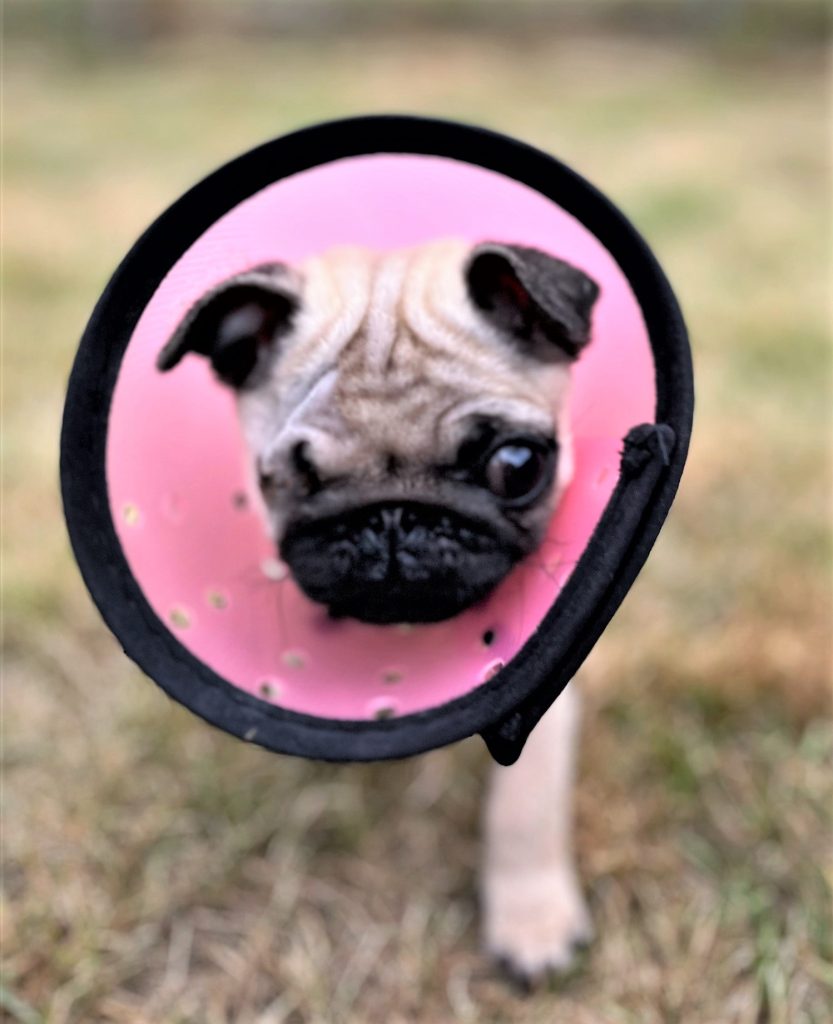
She weighed 1.1kg and needed to wear a cone so she could not scratch or infect the wound as it healed.
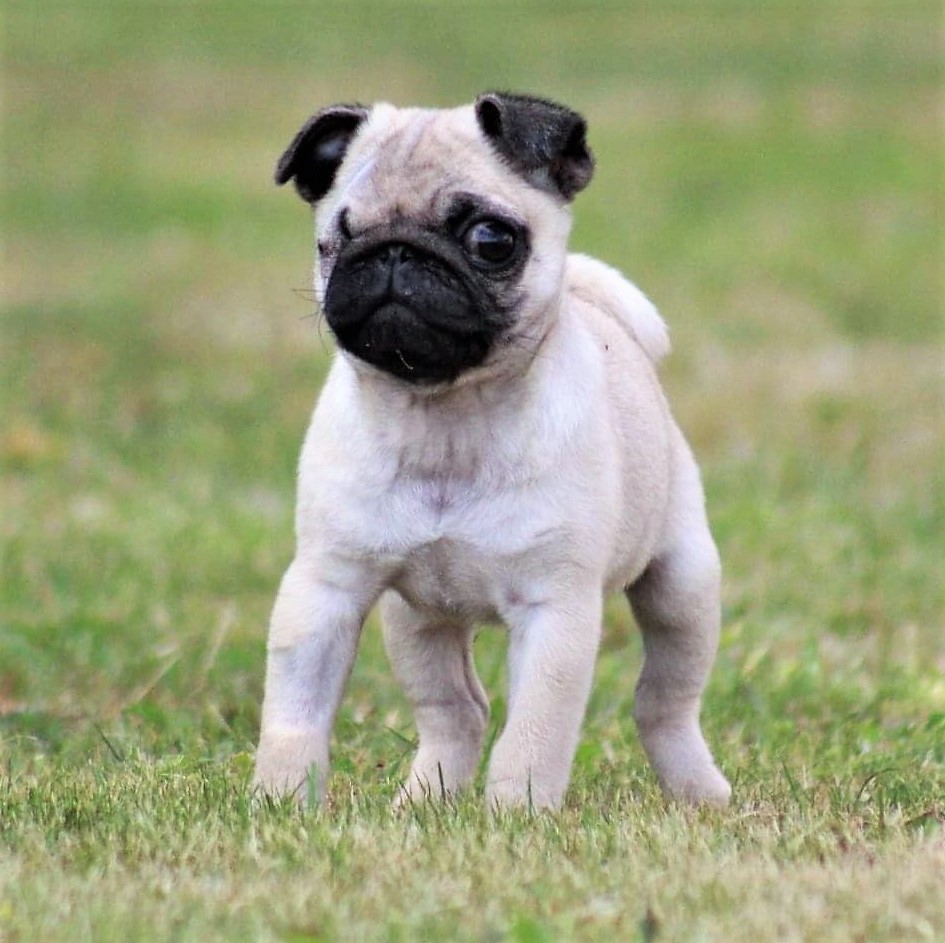
A few days later, she was at the house that would become her forever home, joining two PDWRA adopted pugs, and her Frenchie-pug sister.
Peggy’s recovery from her operation was smooth, and she now enjoys regular walks with her pack and weighs almost 4kg.
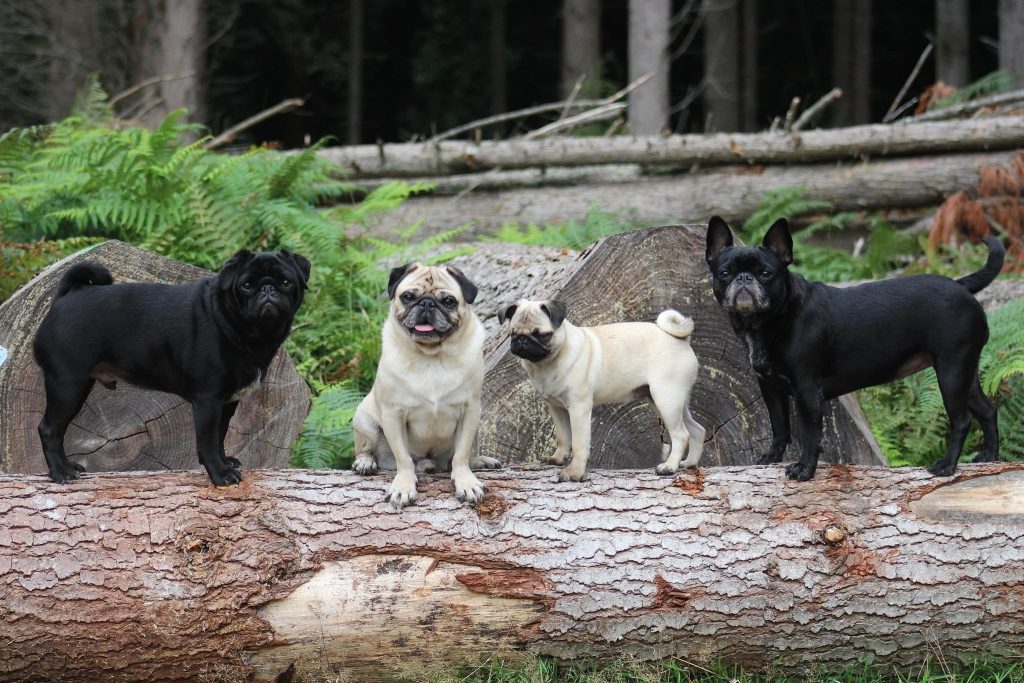
“Peggy is a lovely, sweet-natured if mischievous little girl who massively looks up to the older dogs.” said PDWRA volunteer, Tris, Peggy’s ‘dad.’
“She had a really traumatic week early on in her life but the network of volunteers in the PDWRA is so strong that it wasn’t going to be long before her perfect home was found. Fortunately, that’s here with us. She’s a special girl and we adore her!”.