by Yasmin | 6 Aug, 2025 | Blog, Rescue Stories
In April’s newsletter you may have read the article about Laura & her pug Ethel and how her pug story began 40 years ago. Well following on from that, as Laura is my daughter, here is my story of how I discovered Pug Welfare and my pug journey.
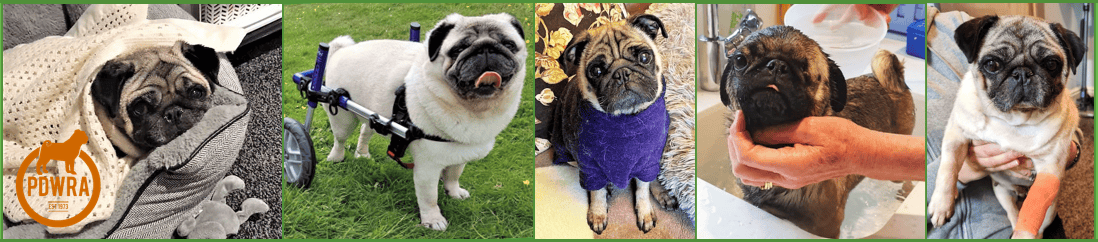
Having bought from a breeder, our first pug Honey in 1984, during a chance meeting while out on a dog walk with Honey a fellow pug owner told me about PDWRA and the annual Pug Days at Crowhurst. We sadly lost Honey in 1994 and after her loss we decided to go down the rescue route as PDWRA seemed such a great organisation to adopt through. Over the past 30 + years I have had the pleasure of adopting :- Hanky Panky, Millie, Lily, Mabel and finally, our precious Black Betty, who has been with us for the past 10 years.

I found the process of adopting through PDWRA quite straight forward and it became easier for us as time went by, after each adoption we didn’t have to wait too long to receive a call from Pug Welfare with our next adoptee. Over the years, all our girls were taken to almost every Welfare Day at Crowhurst from 1987 until 2016, when sadly they became no more. They were a great day out, games for the pugs, raffles and various different stalls, plus the much loved auction to raise money for pug welfare. Another not to be missed PDWRA occasion were the Pug Tea Parties that were held once or twice a year during the summer months, the pugs and the humans always had a great time!!
The pugs I have adopted have always enjoyed a holiday away with us, over the years they have been to Yorkshire, Norfolk, down to Devon and to West Sussex, and nearer to us on the Kent coast. I must say, although the girls have always enjoyed a change of scenery, running on the sand – definitely not in the water! or enjoying a new walk and smells in the Countryside, they always loved getting home, back into their comfort zone! This goes especially for Betty, she’s a real home pug and loves her daily routine.

We adopted Betty in 2015, she was a little over 5 years old and my most vivid memory of her is arriving at 2pm on the 26thMarch. Judi and Andrew pulled onto the drive and out jumped the prettiest, bright eyed little black pug, who promptly breezed into our lives as much to say “well I’m here”! She had a quick look around, made sure she had no opposition and everything met with her standards and approval, checked out the garden, christened the grass and decided she’d stay!!!
Betty has been a joy to have in our lives, as an elderly lady now she has become even more feisty and stubborn, aging ladies do have that privilege. Her sight is not so good now and Betty has arthritis in her back, but she copes well with her eye drops and her regular injections at the vets and she still retains the loveable character she has always been blessed with. Due to Betty’s advanced years, she has just celebrated her 15th Birthday, her favourite pastimes now are eating, sniffing lampposts, barking at anything and sleeping, in any particular order!!

Obviously over the past 40 years there have been ups and downs with looking after a pug, the sheer overwhelming sadness when one of the girls have passed away, but such happiness when a new little pug arrives, full of enthusiasm to start a new life in their forever home.
If I was ever asked “would I pursue the adoption route again after over 30 years?”, I would answer a resounding yes in a heartbeat. Young, middle years or an oldie, each pug brings their own character and rewards you with love and the trust they give you, is such a beautiful thing.
I feel so grateful to have shared such a large part of Betty’s life, and parts of all the other girls who have gone before, and also my 35 years of being part of such a wonderful pug charity. Plus, the added assurance that you are always able to contact PDWRA if you need any medical advice or support, the members are always there to help and advise.
Hopefully PDWRA will continue their brilliant work rehoming our lovely breed for another 50+ years!
*****
If you could provide a forever home by adopting a pug in need, please see latest details for applications at:
https://pugwelfare-rescue.org.uk/adopting-a-pug/
If you would alternatively like to help a pug along its journey by fostering, please see:
https://pugwelfare-rescue.org.uk/fostering-a-pug/
by Yasmin | 10 Jun, 2025 | Blog, Pug Health
Article by Helen McKee (MRCVS) PDWRA Vet Advisor.
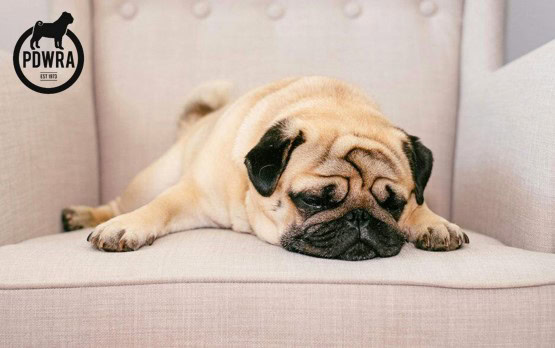
How can I tell if my pet still has a good quality of life?
All pet owners want their companion to have a good life. As your pet gets older, or if they’re diagnosed with a serious illness, you may worry that they’re suffering and have more bad days than good.
It can be easy to tell if your pet has a really good quality of life – they’re still playful, active, comfortable and enjoying their food normally. Sometimes, it’ll be very noticeable that your pet is in pain and is suffering after an accident or a sudden illness. But it’s more difficult to notice problems when your pet’s quality of life gradually changes over time.
As owners, we get used to the ways our pets slow down as they age and the extra medications they might need to take. It can be difficult to tell when things start to deteriorate and, emotionally, we might not want to admit that they’re struggling.
It’s important for us to be aware of when things might be getting too much for our pet. It means we can start to prepare ourselves and ensure that our beloved friend won’t suffer.
Measuring your pet’s quality of life
Quality of life isn’t measured by just one thing; it takes into account all of the parts of your pet’s mental and physical wellbeing. This means it can be difficult to measure.
Your vet can help you measure your pet’s quality of life. But your vet only sees your pet during an appointment, and they know you are best-placed to understand how they are getting on day to day.
If their quality of life is getting worse, this doesn’t always mean that it’s time to say goodbye. It’s always best to visit the vet if you notice a change in your pet, even if they already have a diagnosis of a serious illness. There may be other medications or management techniques to help your pet. If other options are not right for your pet, then your vet can give you guidance on when it might be the time to say goodbye. It is particularly important if your pug has a terminal disease and medication cannot keep them comfortable.
You can use the pointers below to regularly check on your pet’s quality of life. It’s good to do this regularly as it can help you spot when things are starting to change.
- Are they in pain?
- Do they shake, tremble or pant, even when they’re resting?
- Do they hide away and not want to be touched or stroked?
- Does it seem to you that their pain medication has stopped working?
- Are they struggling to get around?
- Do they struggle to get up without your help?
- Are they unable to exercise, even just gently?
- Do they lie in the same place all day?
- Do they often fall over or lose their balance?
- Do they pant more than usual or seem to be struggling for breath?
- Are they eating and drinking normally?
- Have they lost interest in food, even turning down their favourite treats?
- Are they being sick or suffering from diarrhoea?
- Are they losing weight?
- Are they going to the toilet normally?
- Is your dog struggling to let you know when they need to go outside?
- Is your pet pooing and weeing where they rest?
- Can they keep themselves clean?
- Do they smell of wee or can’t keep their bum clean?
- Does their fur look duller and less healthy than it used to?
- Has the way they behave changed?
- Have they stopped greeting you when you come home?
- Are they hiding or sleeping in strange places?
- Have they stopped being interested in what’s going on around them?
- Does your pet seem unhappy or unwell in themselves?
- Do they seem confused in normal situations?
- How are you coping with looking after them?
- Do you feel overwhelmed by caring for them?
- Are you worried that you can no longer meet their needs?
- Is it becoming more stressful to give medications to them?
- Are they coping overall?
- Are they having more bad days than good days?
- Is your pet finding being medicated very stressful?
- Put yourself in your pet’s position – how do you think they would rate their quality of life?

If the answers to many of these questions is yes, it’s a sign your pet is struggling. You can use these questions as a guide to see if their quality of life is changing. You may feel like you’re able to help them through the changes for a while longer or perhaps that it’s time to consider having your pet put to sleep.
You also need to consider what is important from your individual pet’s point of view. If, at their best, they love to chase their ball, then it will have greater impact on their wellbeing if they can’t do this anymore. Other pets may be fairly happy as long as they’re comfortable and not in pain, even though they can’t race around as well as before. As well as considering the questions above, make a list of your pet’s favourite activities. Think about whether your pet is able to do those activities as normal, less than normal but still acceptably, or not at all. It can help to keep a diary or a log to track changes over weeks, or even months.
What should I do next?
Now is the time to speak to your vet. Talk to them about your pet’s quality of life and what your concerns are. The vet will be able to guide and help you make the right decision.

In Summary
Unfortunately, it is rare for a dog to die peacefully at home without some intervention.
We have to decide if there are more bad days than good, and also ask ourselves, are we doing the best by the pug, or are we being selfish.
For me, I feel it is a gift that we can give our beloved companions, so there is no suffering (unlike humans!) and I personally would rather say goodbye a little earlier than leave later when they could be suffering.
Wishing everyone the strength to make the difficult decision we all need to make at some stage as an owner of a pet.
Helen McKee (MRCVS)
PDWRA Vet Advisor.
*****
For other informative pug health articles, please see our web section: https://pugwelfare-rescue.org.uk/pug-health/